

Author: Charlie
Estimated Time To Read: 10 minutes/1 large coffee
"January is a write off... I'll start again in February"
In mid-January I saw the above comment under an Instagram reel, and honestly, it made me incredibly sad.
And I felt sadder still because the reel’s creator was a well-known comedian, whose *iconic* (in my opinion) satirical send-ups of the unrealistic way people’s bodies are portrayed on social media have created a refreshing wave of positivity and warmth, in an otherwise frequently uncomfortable and judgemental space.
Despite that positivity and warmth, and the creator’s message typically being one of encouragement to accept yourself just as you are, granny pants and all - here was someone who still felt they had to expect perfection from themselves.
This commenter enjoyed the creator’s content, and clearly watched her fairly regularly.
They had the capacity to accept another person’s imperfections, and even love that person for those imperfections… yet that capacity did not extend to themselves.
And as I scrolled through the replies to that comment (never read the comments, I know, I know), that initial sadness turned into something bordering on despair as I read reply, after reply, after reply…
All from people in wholehearted agreement:
January is indeed, a write off. We will start in February.
The reason I felt so sad reading the comments on that reel was that, first off, it straight up sucks to feel like you’ve messed up and your efforts were worthless.
That’s not a good place to be in, mentally (believe me, I own this t-shirt in many different colours)…
And secondly, by writing things off until some arbitrary future date (be it a new week, or a new month) you’re missing out on all the positive changes, progress, skills and experience you would have gained in the meantime.
That straight up sucks too.

Now, having made my first mistake in reading the comments section of a social media post in the first place, I opted to not to make a second one by giving any kind of response.
I doubted I could change the commenters' minds; after all, as just another stranger on the internet, my opinion - however well intentioned - is likely irrelevant to them, and my unsolicited advice would probably be unwelcome...
So I decided to share my thoughts with the people who have asked for them. The folks who signed up for our weekly nuggets of wisdom, actionable tips and (sometimes silly but always insightful) stories: The Body Matters Family.
And as I started typing, I realised I had a LOT more thoughts, feelings and opinions than I first thought - so what was going to be an email ended up turning into a two-part blog about breaking free from this cycle of starting over: How to stop saying "I'll start again on Monday."
Each of these two blogs covers one of the main considerations we’d recommend you explore, based on our experience of helping people find the most efficient (read: less effort, more results) way to move past their feelings of their efforts being a write-off.
Those considerations are:

Does your chosen approach actually suit you?

If you believe your approach does suit you, how are you THINKING about your approach?
In the first blog of this series, we covered the first consideration: your approach (you can check that out here)...
So in this second installment we're moving on to....

I’ll-start-again-on-Monday-ism Consideration #2:
HOW YOU THINK ABOUT YOUR APPROACH
Let's say you've followed all of the steps we covered in Breaking the "I'll start again on Monday" cycle: Part 1 ...
You've tossed aside the methods that don't serve you and zeroed in on the principles that do...
You've created an approach which, on paper, should fit perfectly into the landscape of your life...
BUT you still find yourself saying "I've blown it", or "this week is a write off, I'll start again next week"?
Well, there's a sneaky little gremlin that often gets overlooked by traditional "diets", one that can sabotage your valiant efforts without you even realising it:
Your Mindset.
Now I have to admit, I cringe using that word. It’s become a bit of a cliche and I personally associate it with pseudo-psychology-guru nonsense.
So let me be clear…
We aren’t talking about forcing yourself to accept a way of living that doesn’t align with you.
We aren’t going to tell you to make “attitude adjustments” or subject you to the kind of blaming, shaming, “if you wanted it badly enough you’d do it” so-called advice that self-styled life coaches like to spout on social media.
When I say “mindset”, what I’m referring to is simply the lens through which you view your lifestyle changes - and if it's smudged with unrealistic expectations, or grubby with black and white thinking, every challenge starts to look like an insurmountable mountain.
So let's scrub that lens clean and explore how shifting your perspective can transform these obstacles into opportunities.
Is the way you THINK about your approach getting in your way?
For example: if THIS happened...

Would you react like this?
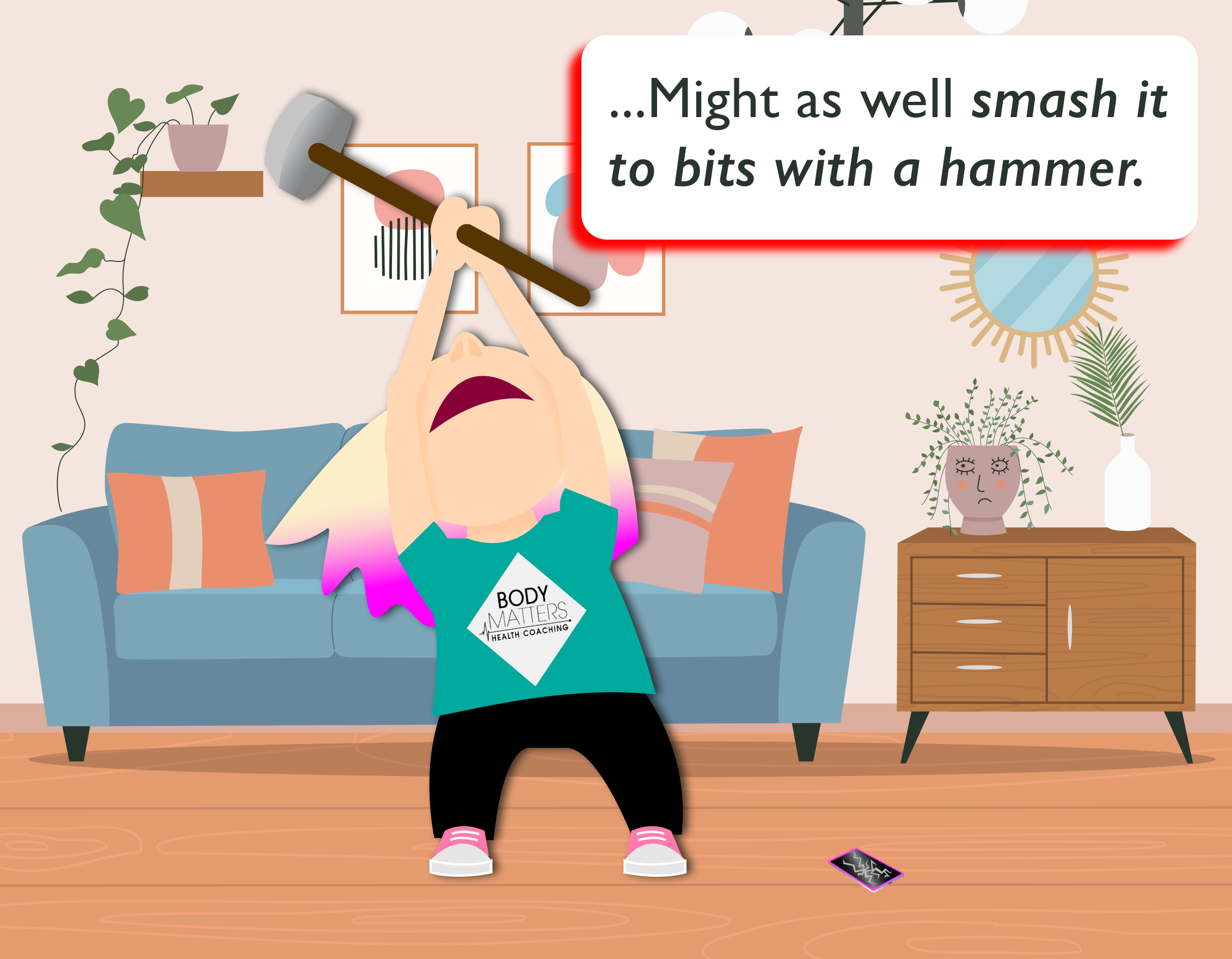
If you encountered THIS unfortunate scenario...
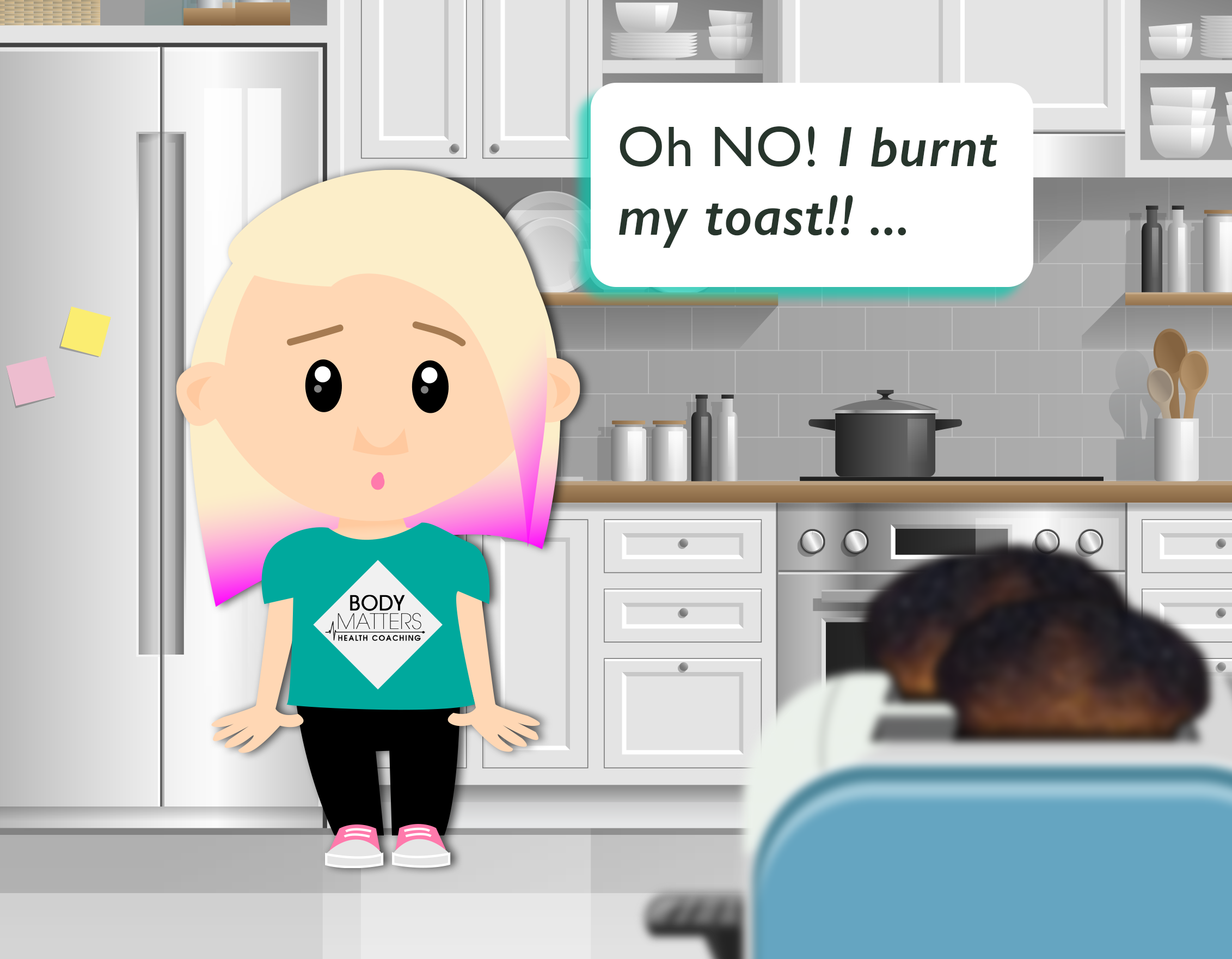
...this would be you, right? (After a quick jaunt to B&Q)
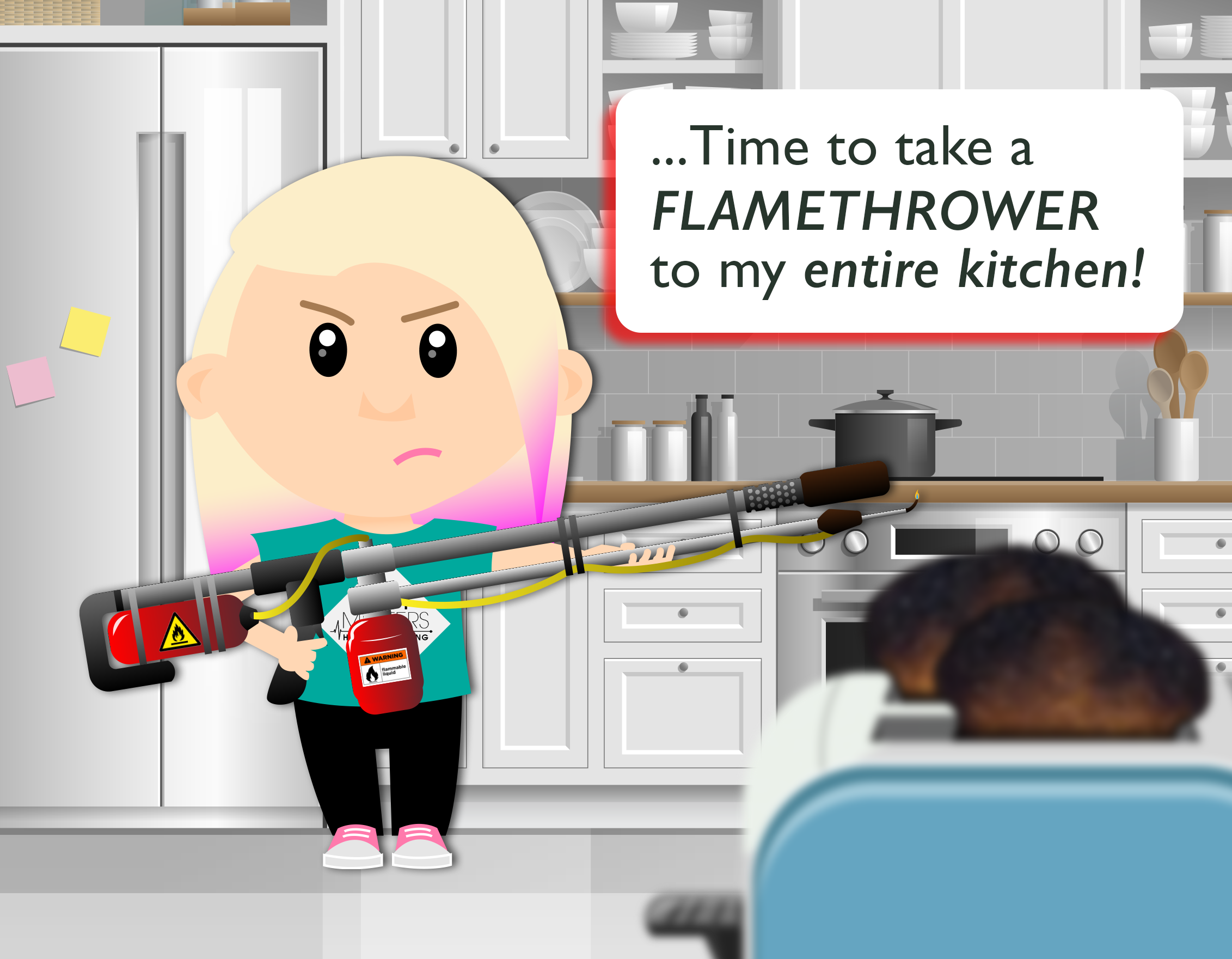
How about this one?
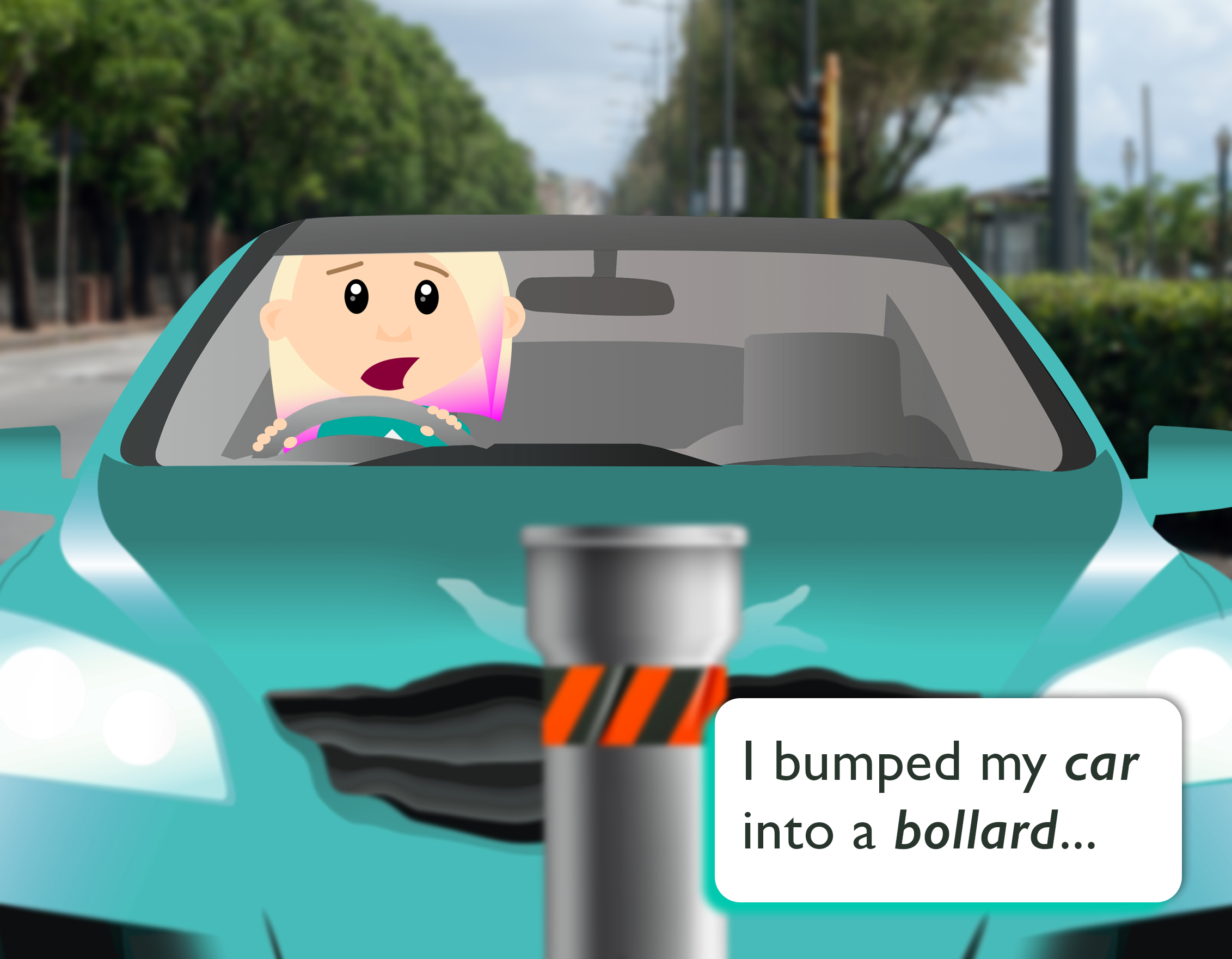

And we've ALL been here, right? (...Right?)
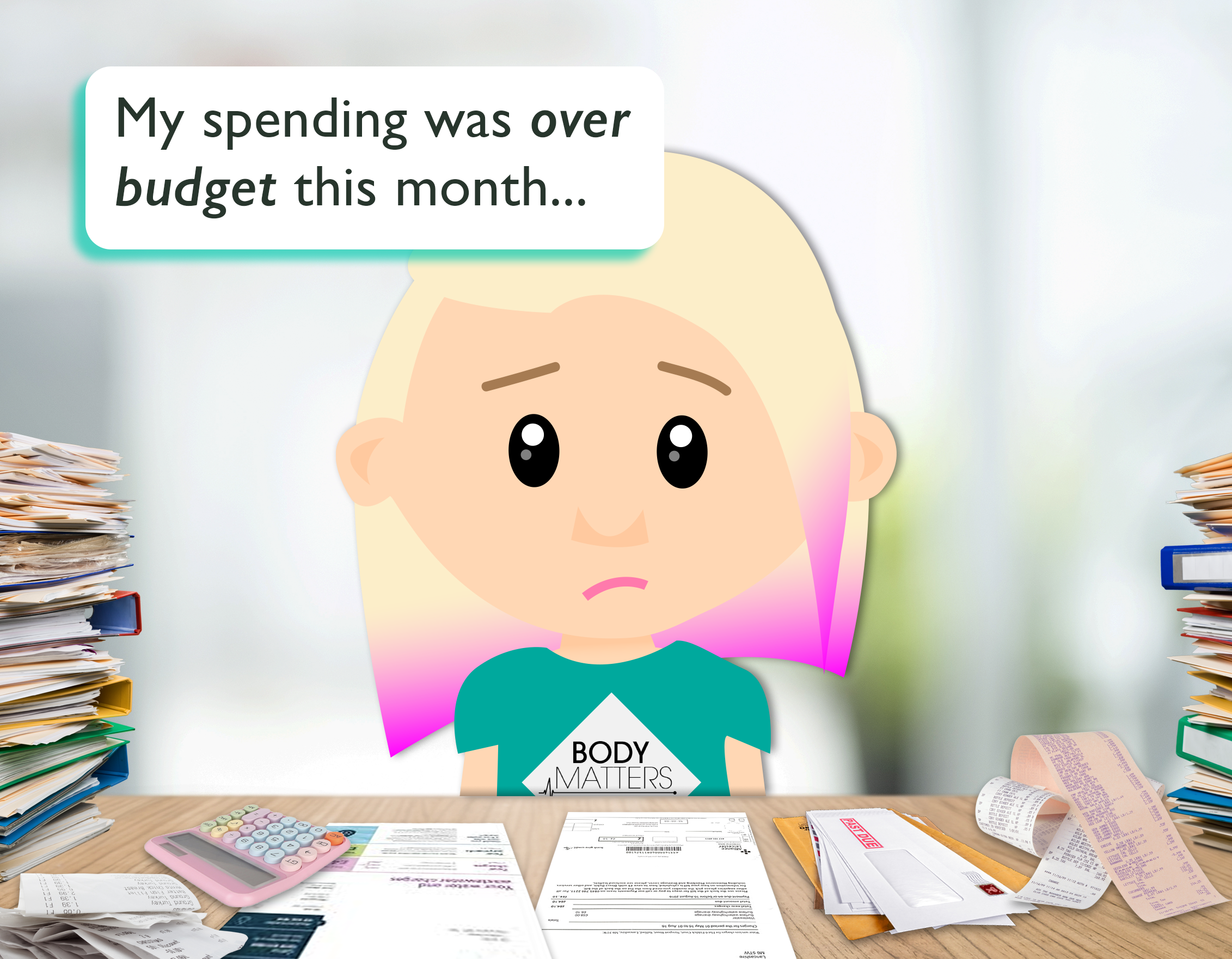
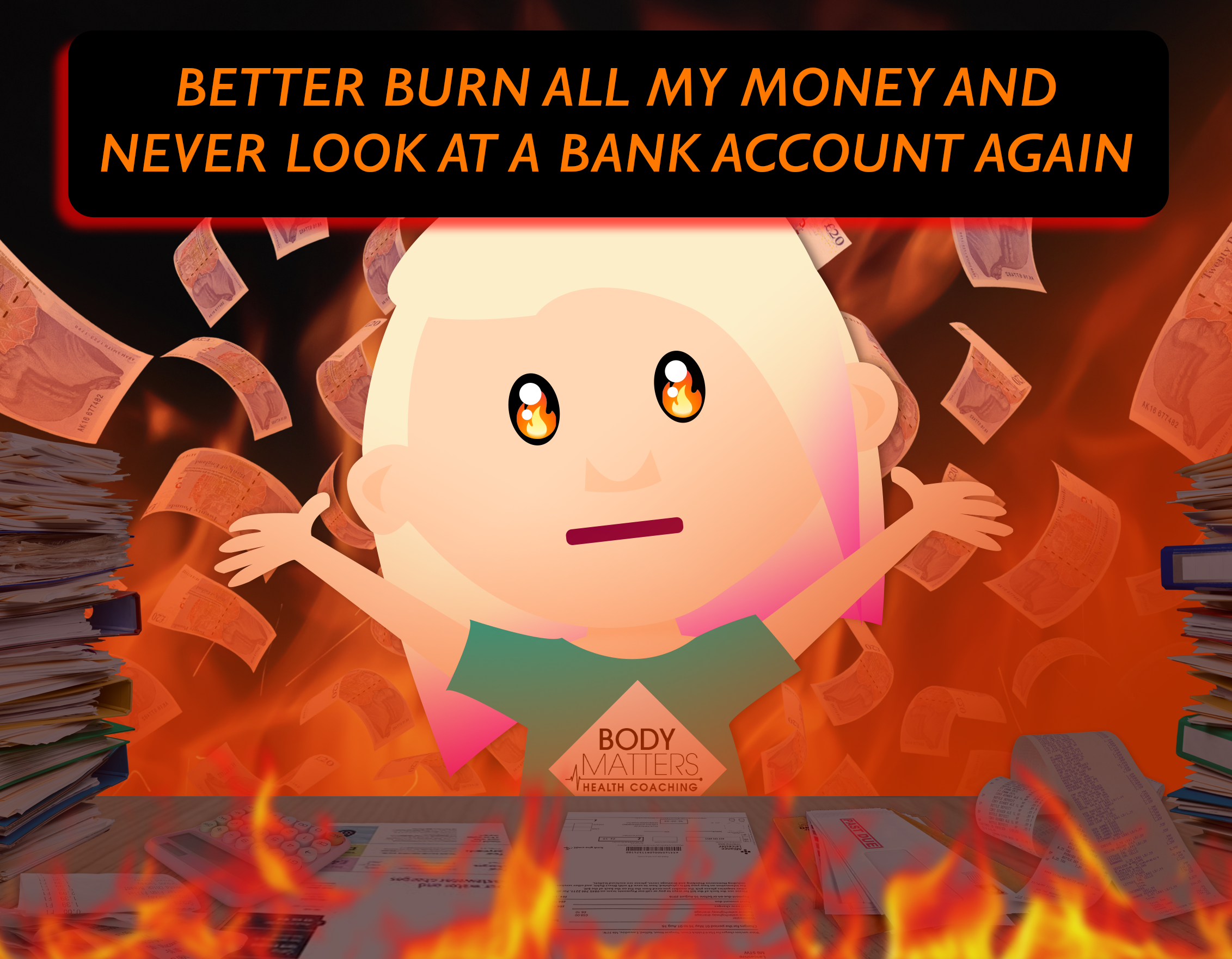
I mean, these examples make perfect sense, don't they?
NO! I hear you exclaim collectively over the internet.
Of course, you (hopefully!) don't react this way to every bump in the road.
But when it comes to your health and fitness journey, black-and-white thinking like this is surprisingly common… and shows up in many forms:

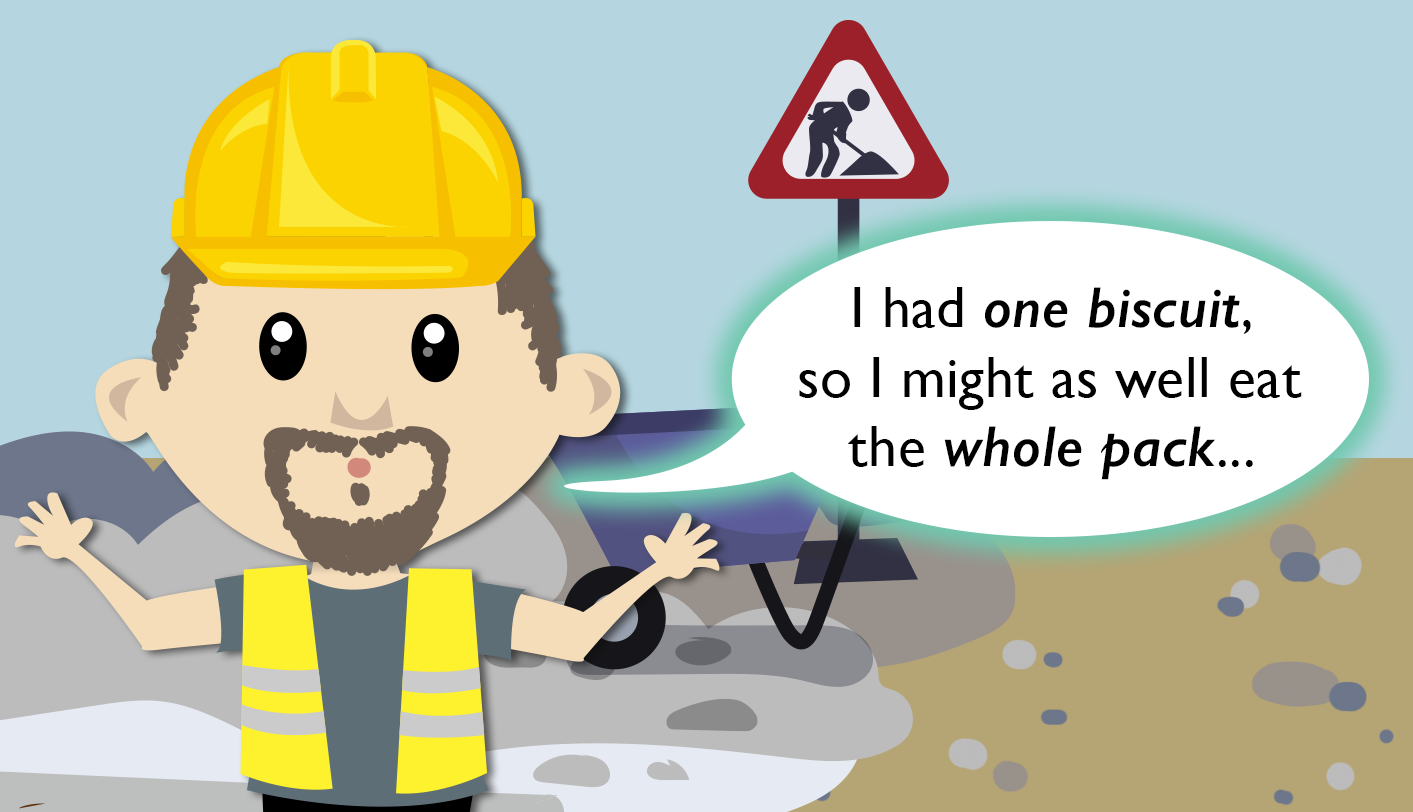
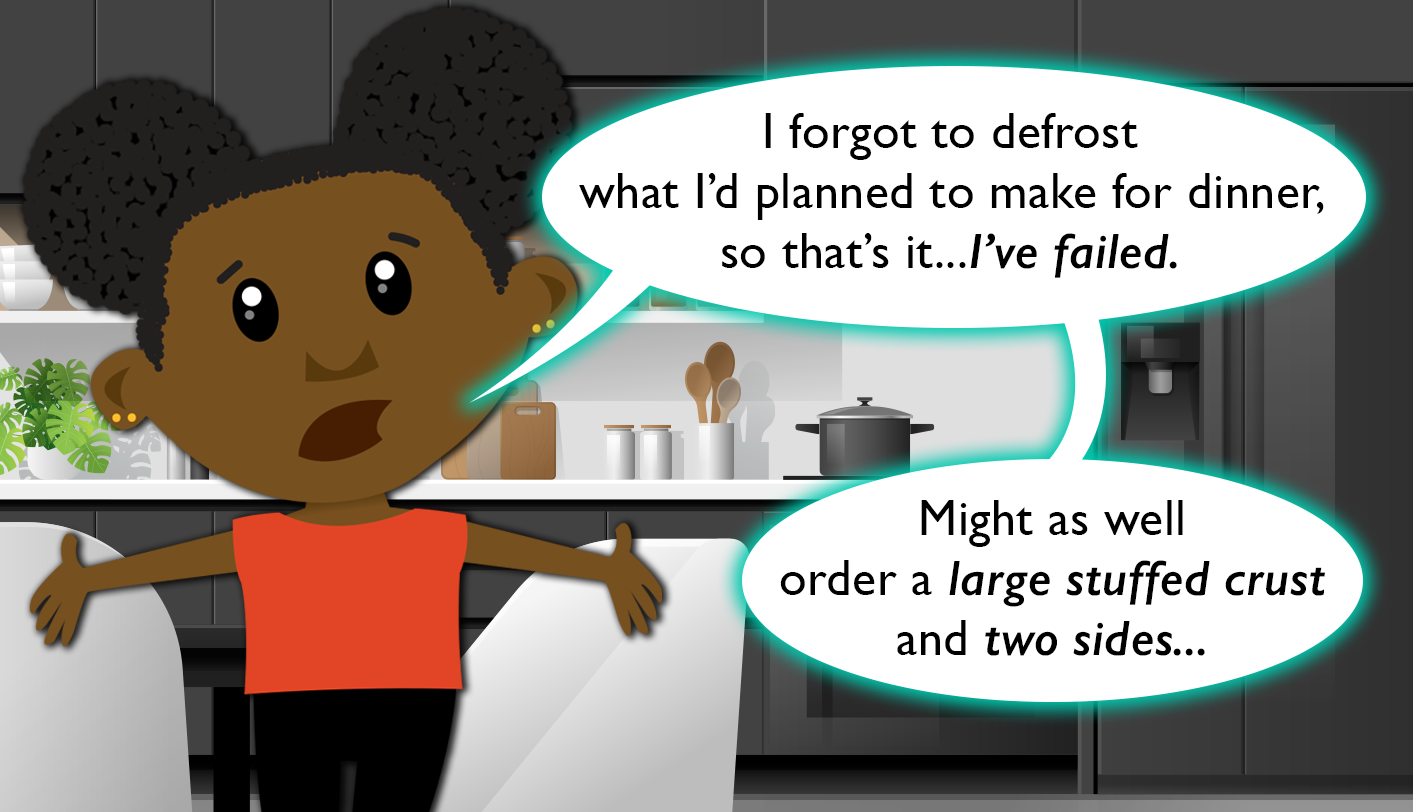
Cue a chorus of:
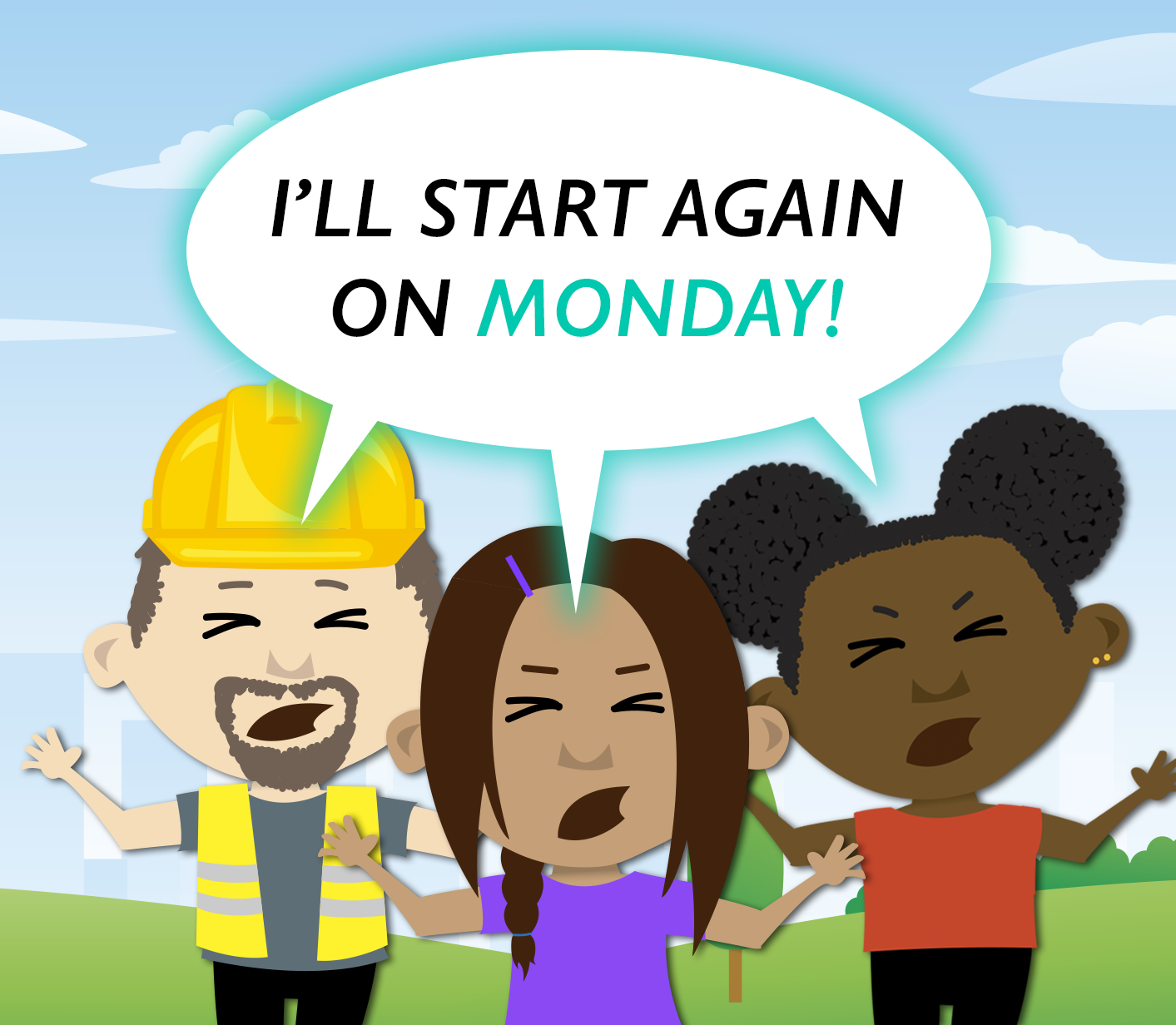
These are all examples of “Black and White”, or "all or nothing" thinking, which can be incredibly damaging to your mindset, motivation AND results.
This way of thinking tells you there's no point trying to do something at all unless you can do it perfectly. And it can become a real issue, because if we hold ourselves to that impossible standard, failure is inevitable.
By acknowledging that perfection is unattainable and that small setbacks should not derail your entire progress, you can escape the cycle of "I'll start again on Monday".
So we're gonna dish out two practical tips that can help reframe your thinking and keep you on the path to success, even when faced with the occasional slip-up.
MINDSET TIP
Swap "all or nothing" for "something or nothing"
Contrary to what “grindset” types would tell you, ditching the "all or nothing" mentality doesn't mean lower standards; it means smarter, more compassionate standards that account for the complexities of real life.
Think of it less like a binary light switch and more like a dimmer, where you have a range of options between full brightness and total darkness.
Here are a few everyday examples of how to apply a "something is better than nothing" approach:

When you can't do the 45 minute exercise session you planned:
Instead of skipping it entirely because you're short on time, you could try doing just one set of each exercise, rather than your planned three, or doing a quick 10 minute circuit. This keeps your exercise habit alive and can still provide significant health benefits.

When healthy eating doesn't go as you'd hoped:
If your family decides to order pizza unexpectedly, maybe you choose to savour a couple of slices, and fill up with a side salad or a steam bag of veggies from the freezer, rather than eat a whole pizza. This helps you be sociable and enjoy fun foods in moderation whilst still aligning with your goals.

When life throws you a curveball and things get out of control:
You might choose to remind yourself that some movement is better than no movement, and making healthful choices when you can is better than not making them at all.
Now I want to be clear, these are just examples… They’re not the ONLY option.
With the support of their coach, every client we work with at Body Matters will come up with their own unique solutions in situations such as these.
Striking a realistic balance looks different for everyone, so we’d encourage you to do the same. (If you need any help with this, get in touch and we’d be more than happy to help)
Whatever your “something” looks like, adopting this approach and thinking flexibly will help you keep moving forwards - instead of feeling like you're stuck in the cycle of starting at square one every week.
MINDSET TIP
reframe Failure as Fortune
Mistakes may feel like failures in the moment, but here's the truth: Small slip-ups aren’t failures - whether it’s eating one too many biscuits or forgoing a workout.
They're learning opportunities.
These setbacks don't erase all the progress you've made or render your future efforts futile.
In fact, they're a natural part of the process. No one is perfect all the time - not even fitness models who get paid to look like... well, fitness models.
I'd go so far as to say that "slip ups" are a GOOD thing.
Let me tell you why...
At some point in your life you’ve probably seen a baby learning to walk, even just on TV.
Now did that baby simply stand right up and walk? Or set off running like Usain Bolt?
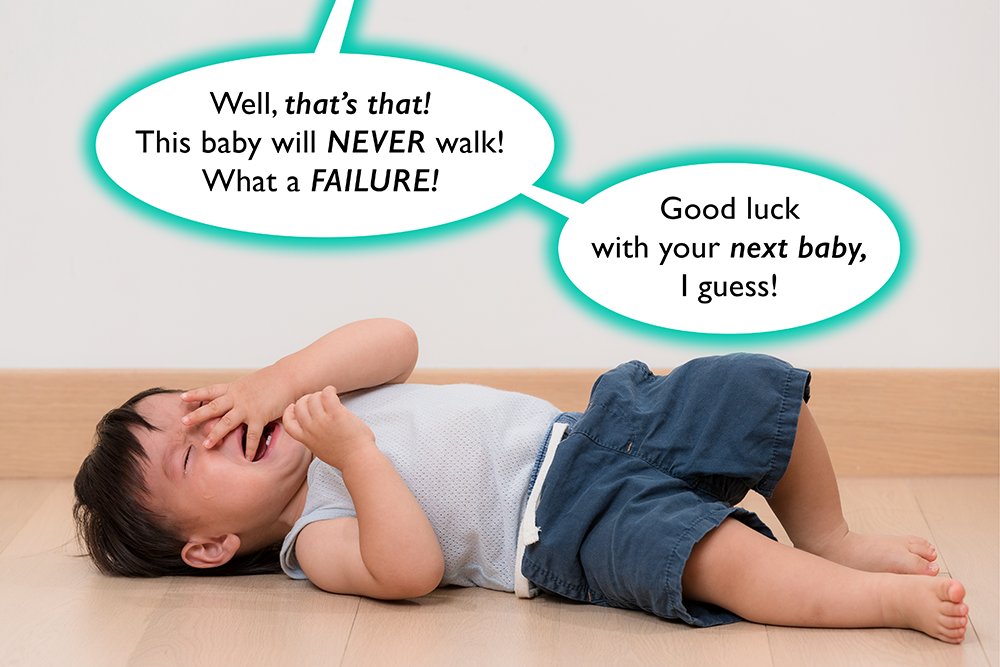
Of course you didn’t, because those slips and falls (metaphorically or literally) are how we develop skills and how we learn.
So, next time things don’t go to plan, remember: you’re richer for having had this experience.
And instead of saying “I’ve failed”, you can embrace the opportunity to learn.
Here's how you can transform obstacles into opportunities...
Reflecting Objectively: From Slip-ups and Setbacks, to Skills and Strategies
Instead of this...
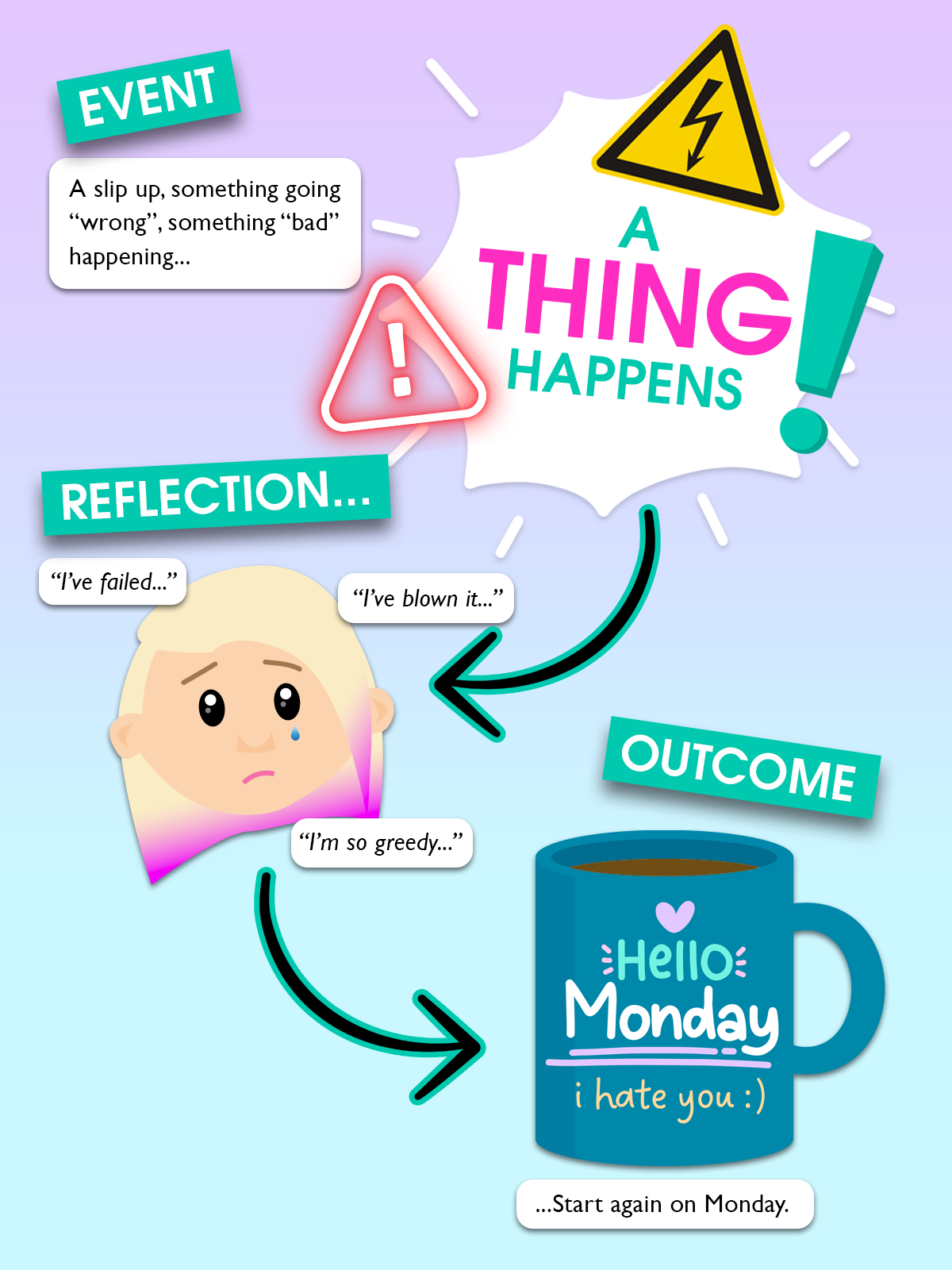
Try this...
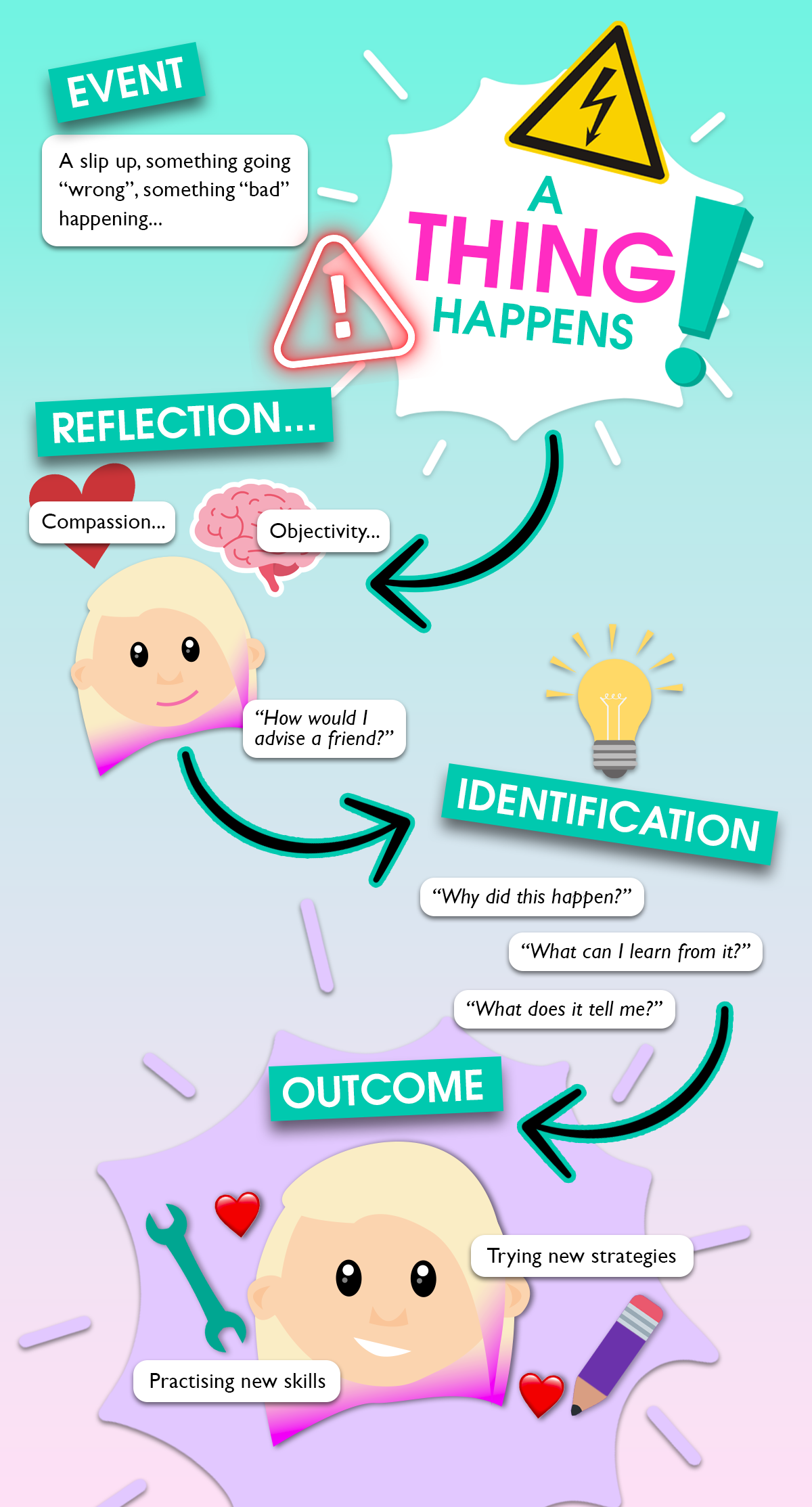
Deconstructing slip-ups and setbacks with objectivity (and compassion!) allows you to pinpoint how they came to be, and therefore transforms those times when things don’t go to plan into invaluable learning moments.
By way of example, imagine this scenario:
You arrive home from an unexpectedly long day at work, famished and ready to devour anything and everything. You search through the cupboards for whatever will satisfy your ‘hanger’ the fastest…
and you find yourself overeating (and needing to replace someone else's chocolate supplies before they notice they’ve been decimated).
So how do we find opportunities in this situation?
Unlike the I'll start again on Monday-ist approach, the objective isn't to label yourself as greedy.
Instead, let's approach our reflection on this situation with the same kind of compassion and objectivity you might give to a friend who is explaining the situation to you...
In doing this, let's say you recognise that extreme hunger was the real culprit.
From this learning experience you realise that you often get home really hungry, and this impacts your food choices when you get home.
As a result, you decide to try keeping long-lasting snacks in your work bag, so you can have a quick banana or a protein bar before you begin your commute home.
You also reassess whether your lunch was sufficiently satisfying to carry you through the day.
Et Voila! A potential solution!
And I say "potential" because it's important to note that applying pass-or-fail perfectionism to proposed solutions is also a form of black-and-white thinking.
Experimentation is part of finding what will work best for you. Think back to that baby, curiously trying new ways to shuffle about and stay on its feet.
Think learn and grow, rather than pass or fail 😉
Objective reflection also takes practice, so here's another example to help you get the reps in:
Let's say you look back on your week and you notice that you've regularly eaten past the point of fullness.
Through objectivity, curiosity, and compassion, you acknowledge that this isn’t a failure - but rather a cue to refine your eating habits.
You decide to try eating more slowly, and regularly stopping throughout your meal to rate your hunger using a 1-10 scale, such as this:
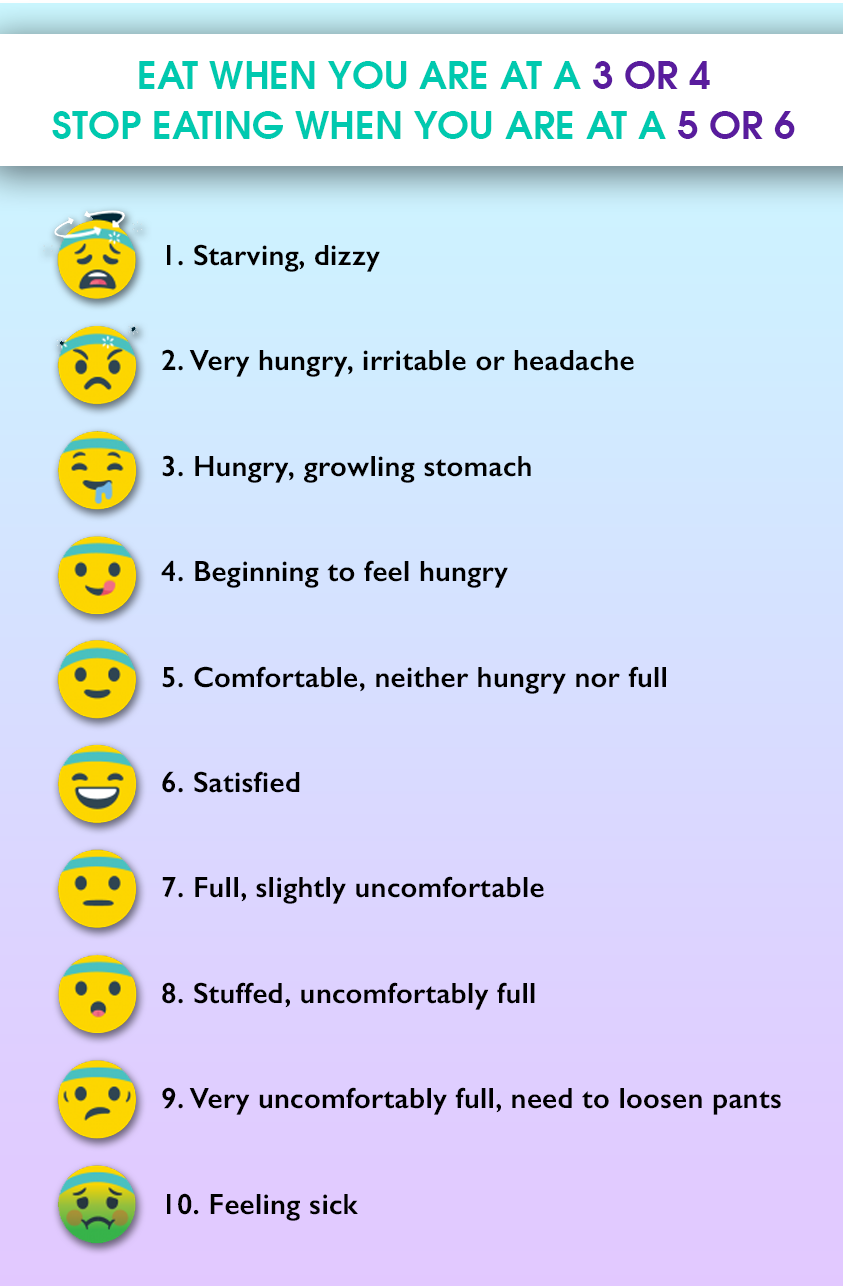
Paying close attention to your hunger and satiety cues can help you become more attuned to when to start and stop eating.
And by eating more slowly, you give your body time to register fullness, reducing the chances of overeating. You also get to notice flavours and textures better!
So you decide to try this for at least 4 weeks to see if it helps.
By practicing compassionate and objective reflection, we can turn setbacks into opportunities to learn and grow.
Each time we encounter a challenge, we can take a step back, assess the situation with curiosity and compassion, and use it as a lesson to improve our skills and strategies for the future.
Feeling Curious? Try giving objective reflection a go!
Think back to a recent event that didn’t go according to plan in your health and fitness journey. Before judging yourself harshly, pause and look at the situation with curiosity.
What contributed to this outcome? What can you learn from it?
Remember, the goal isn’t perfection—practice makes progress, not perfect.
Avoid falling into the trap of black-and-white thinking. Just like that baby learning to walk, every misstep is a part of the learning curve that helps you to balance better next time.
So take a moment, reflect objectively, and you may discover simple, actionable steps to take forward.
BONUS TIP!
Struggling to be objective or compassionate?
Try imagining what you would say to a friend in your situation!

WRAPPING UP...
Something or nothing is better than all or nothing.
As you make your way along the winding (and sometimes rocky!) path that is this ol' lifestyle change malarky, remember that perfection is an unattainable mirage.
However, even the smallest, consistent steps forward (especially those taken after a stumble) give you the closest thing you'll get to perfection: progress.
Objective reflection and compassion are your friends.
When you stop viewing those (inevitable) stumbles in the road as failures, and recognise them as a chance for learning and growth, you transform every experience into an opportunity for progress.
And don't forget - the art of objective reflection isn’t just about troubleshooting the present. It’s about building a resilient foundation for future challenges...
So here's to staying curious!
If you've found this blog helpful...
You'll make giant strides with our amazing free resource, designed to help you rewire how you think about food...
Our exclusive "Food Beliefs Matter" worksheet, typically reserved for our coaching clients, is now available to you FOR FREE.
It's designed to unearth the deep-seated beliefs about food and eating that we all carry—many of which unknowingly hold us back.
By downloading this worksheet, you'll have the opportunity to:
Click below to request your "Food Beliefs Matter" worksheet, so you can start transforming your relationship with food (and therefore your results), today!