
The reason even good advice can make you want to do the exact opposite… and why it happens to all of us.
The hedge that started a rebellion
I have to laugh at myself for this one.
A few months ago, someone mentioned that my hedge was looking a bit overgrown and could probably do with a trim.
They were absolutely right. I'd been thinking the same thing myself for weeks. It was definitely on my mental to-do list.
But the moment they said it, something inside me positively bristled. Suddenly, I didn't want to cut that hedge at all.
Now it's too late. Lots of little birds have made that hedge their home, and I care more about them than how tidy my driveway looks, so it'll have to wait until they move out.

The Science Behind Why We Rebel Against Good Advice
My hedge story perfectly illustrates why one of the most common requests we hear from potential clients—"I just want someone to tell me what to do"—actually sets people up for failure.
Here's what's happening: when we feel our freedom to choose is being threatened (even by well-meaning advice), this triggers something called psychological reactance. It's an automatic response designed to restore our sense of autonomy. Think of it as your brain's way of saying, "Hey, I'm a capable adult who can make my own decisions, thank you very much."
Why Meal Plans and Strict Rules Often Backfire
Many people come to health coaches believing they need rules, meal plans, and strict guidelines. They think their problem is lack of direction. But research shows us something different:
The more prescriptive and controlling an approach feels, the more likely our brain is to rebel against it, even when we initially asked for that structure.
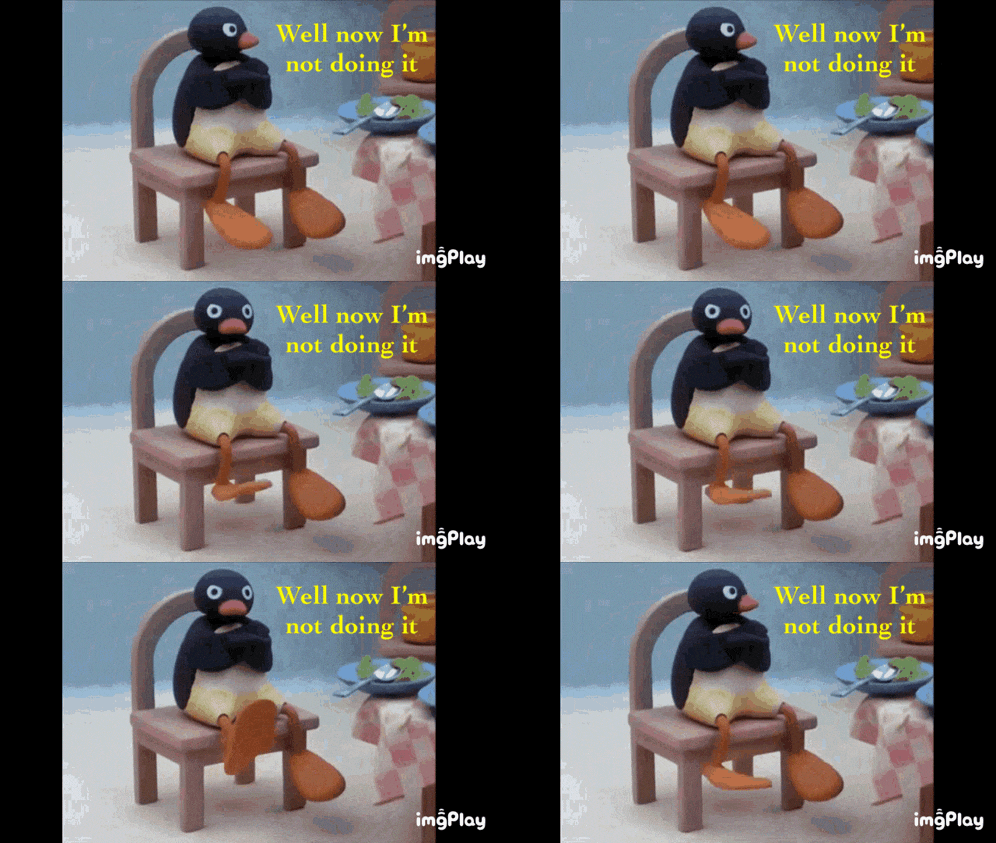
This is just one reason why so many people can follow a meal plan perfectly for two weeks, then suddenly find themselves eating everything they weren't "supposed" to have.

Understanding Your Reactance Type
Now, if you're thinking "But I know people who do well with strict plans!" - you're absolutely right.
Some people have lower reactance tendencies and genuinely thrive with more structured approaches. Others have higher reactance (like me with my hedge) and push back against anything that feels controlling.
Most of us fall somewhere in the middle, and our reactance can vary depending on:
- The situation we're in
- Our current stress levels
- How information is presented to us
This is why there's no one-size-fits-all approach to health coaching. What works brilliantly for your friend might trigger that inner rebel lurking within you—and that doesn't mean you have less willpower.
A Better Approach:
Collaboration Over Control
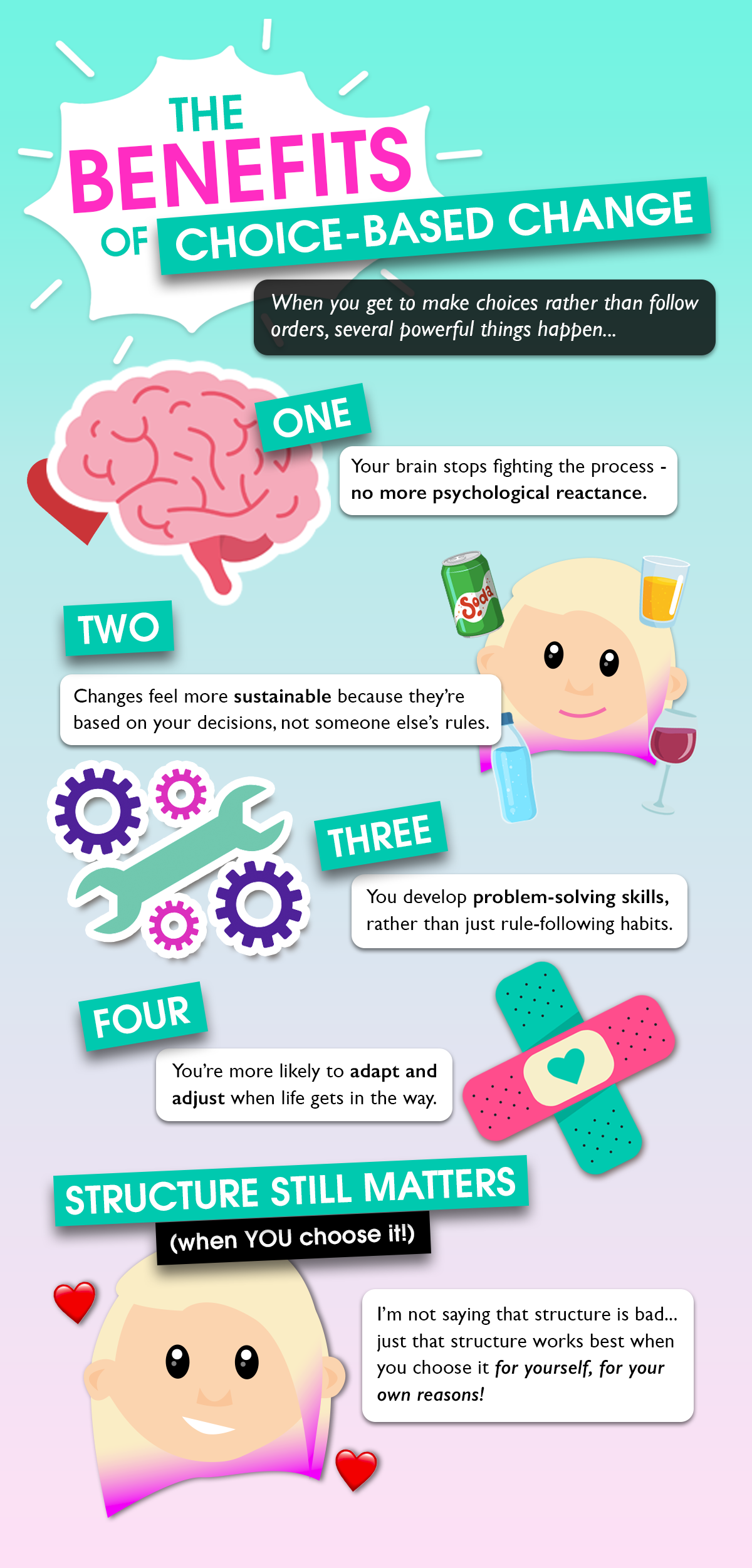
Understanding this changes everything about how we approach helping you to create lasting change in your life and your health...
Instead of starting with "here's what you SHOULD do..."
...we start with exploration to find out what might work for you.
Instead of creating rigid rules...
...we help you build awareness and develop your own guidelines based on your values, preferences, and lifestyle.
Instead of positioning ourselves as the authority who knows what's best...
...we recognise that you're the expert on your own life. Our job is to provide knowledge, support, and guidance while you make informed decisions that are truly yours.
How this looks in real conversations
Here's how collaborative health coaching looks in practice.
Rather than: "You need to eat more protein and fibre."
We might say: "You've mentioned that your meals don't seem to keep you full for very long. Do you have any ideas about what might help make them more satisfying?"
And if you’re not sure: "Would it be helpful to learn more about how to make meals more filling? I can even give you some specific ideas based on foods you already enjoy."
Rather than: "You should go for walks every day."
We might ask: "You mentioned feeling better when you get outside. What would make it easier for you to have that time?"
Rather than: "Stop eating late at night."
We might explore: "On one hand, you're saying that evening snacking doesn't make you feel great, but on the other hand, it sounds like it's meeting some need for you. Help me understand what that might be."
Now, it goes without saying that we adapt our coaching style based on the person in front of us, but the main thing is: we listen, we collaborate and we come up with solutions through our combined expertise.
Working with your inner rebel
So, next time you catch yourself thinking "I just want someone to tell me what to do," remember: what you probably actually want is someone to help you figure out what works for YOU.
And if you find yourself rebelling against advice (even good advice), don't beat yourself up about a lack of willpower. It's just your brain doing brain things, protecting your autonomy (and the wildlife in your hedge).
Even if you feel like you might have a rather vocal inner rebel, the question doesn't have to be "How do I become better at following rules?"
It can be "How do I create an approach that honors my need for autonomy while still moving me toward my goals?"

WRAPPING UP...
When we work with your brain's natural tendencies instead of against them, everything becomes easier.
The next time someone gives you perfectly good advice and you feel that familiar bristle of resistance, remember: you're not broken, stubborn, or lacking willpower. You're human, and your brain is designed to protect your autonomy.
The question is: how can you use this knowledge to create positive changes that actually stick?
Ready to explore a collaborative approach to health? One that treats you as the expert on your own life while providing the knowledge and support you need? Our team specialises in working with your natural psychology, not against it.
BOOKING LINK BUTTON
P.S. I'm still slightly annoyed about that hedge comment, which tells you something about how persistent psychological reactance can be! But at least the birds are happy.


Want more tips like this?
Sign up for our newsletter to get weekly insights straight to your inbox!
We have an “all substance, no spam” policy, so we only send emails which we think will genuinely help you. If for any reason you don’t want to hear from us anymore – that’s cool. We value and encourage choice, so you can unsubscribe any time.