
In our last blog, we put the idea that “it takes 21 days to form a habit” to bed, revealing that it’s more like a median of 211 days for exercise to become habitual. But there's another plot twist...
21 days? 211 days? …Or SIX HUNDRED days?
Remember that study of 30,000+ gym-goers that revealed the 211-day median average for habit formation?
Well, if we take a trip back to your school days (I know, I too would rather forget them… and my terrible bowl fringe) I’m sure you remember that there are more ways of measuring an average than the median. So let’s talk about them too- specifically, range.

Not THAT kind of range...
So, if you've ever wondered why your mate Sarah seems to effortlessly bounce out of bed for 6am yoga while you're still negotiating with yourself about whether today counts as a rest day after three months of trying, this might explain everything.
But before you start thinking it's because Sarah has superhuman willpower and you're just a bit rubbish - let me stop you right there.
It's Really, Truly, Not About Willpower.
I know, I know. When people hear about these massive differences in habit formation speed, the brain immediately goes to:
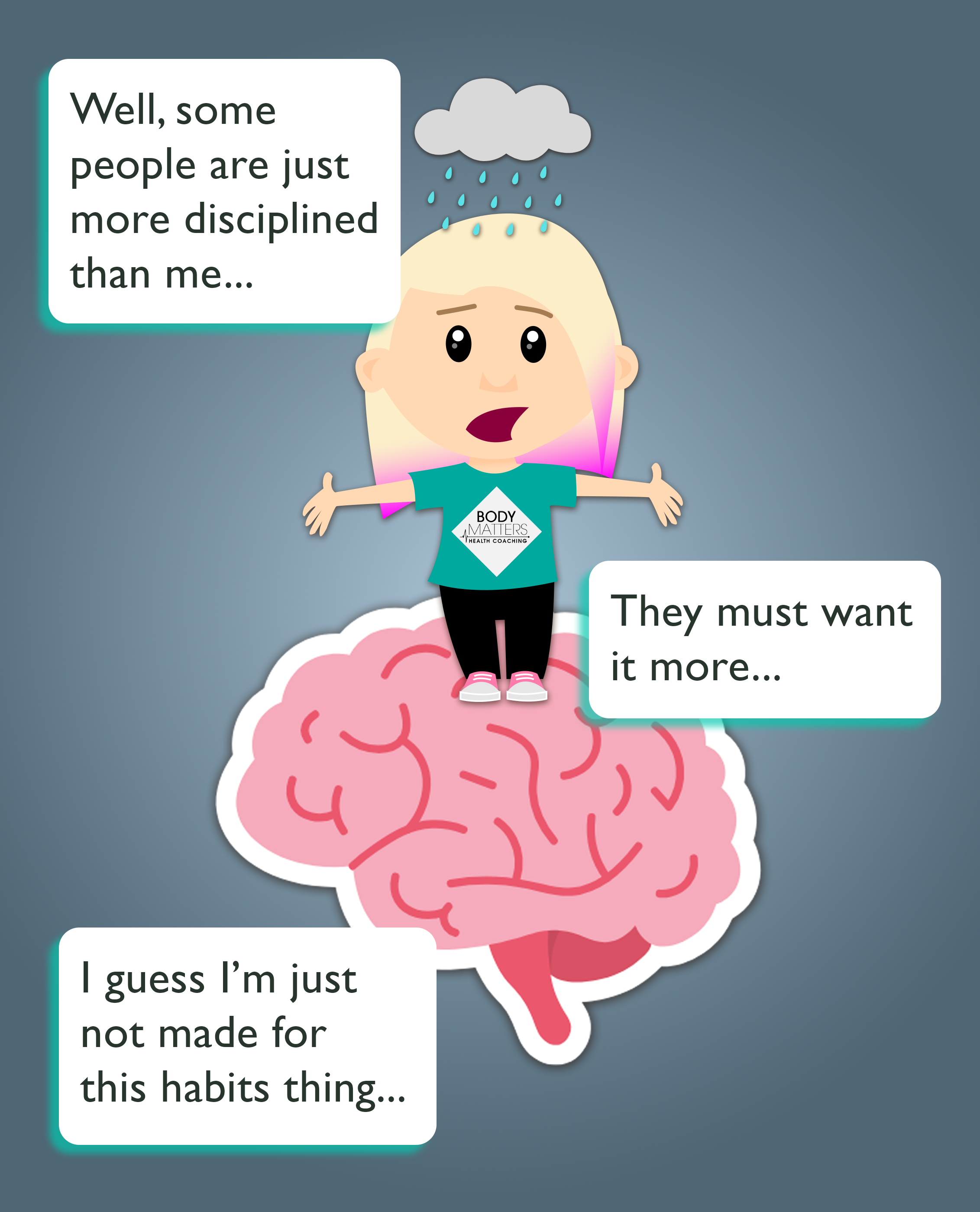
But here's the thing - and I cannot stress this enough - none of that is true.
The factors that influence how quickly you form habits have absolutely nothing to do with your character, your motivation, or how much you "want it."
They're mostly about circumstances that are completely outside your control, and - even though I sound like I’m writing for Buzzfeed when I say this - some that might genuinely surprise you.
What Actually Makes The Difference
It's not just about age (but age does matter).
It's not just about age (but age does matter).
The research found that older people formed habits more predictably than younger folks.
Now, before anyone starts feeling bad about their age bracket, this isn't about older people being "better" at habits. There are some pretty logical reasons for this pattern.
Think about it - if you're in your 40s or 50s, and you've maintained a gym membership, you've probably already figured out a thing or two about what works for you. You've had decades to experiment with different approaches, fail spectacularly a few times (haven't we all?), and gradually work out your personal formula.
Plus, there's what researchers call the "survivorship effect" - basically, the people who are still showing up to the gym later in life might be the ones who were naturally better at sticking with things in the first place. The ones who struggled might have given up and tried different approaches to staying healthy.
And let's be honest, if you're 25 and juggling university, a new job, possibly learning “how to adult” for the first time, and trying to figure out who you even are, you've got a few more balls in the air than someone whose life has settled into more of a rhythm.
Your Environment Is Doing More Heavy Lifting Than You Think...
People living in quieter, less densely populated areas with stable family situations formed habits much more predictably than younger people living in busy cities.
At first glance, I was surprised by this. As someone living rurally, the 45 minute round trip to a gym definitely feels like a barrier to exercise. And I’m always amazed by all the opportunities city dwellers have, constantly at their disposal… but I suppose that can be a blessing and a curse, right?
If you live somewhere rural or suburban, your daily routine probably has fewer variables. You're not walking past seventeen different coffee shops on your way to work, each offering a slightly different experience that might derail your carefully planned morning. You're not constantly being bombarded with notifications about new fitness classes, pop-up events, or that colleague who's always suggesting after-work drinks instead of the gym.
City life, especially when you're younger, is basically decision fatigue in built-up form. Every day you're making hundreds of tiny choices that your rural counterparts simply don't have to make. No wonder it's harder to develop automatic behaviors when your environment is constantly serving up new options and distractions.
It's not that city-dwellers are worse at habits - they're just stuck playing in expert mode while others get to play on easy - in this respect at least.
Some Habits Are Just Harder Than Others (Obviously)
Here's where things get really interesting...
The same research looked at different types of habits, and the timelines were bonkers different.
Nurses learning to sanitise their hands? About 14 shifts on average. Eating a piece of fruit with lunch? Around 65 days. Going to the gym? Anywhere from 85 to 597 days.
The pattern is pretty clear - simple, quick actions that slot easily into existing routines become automatic much faster than complex behaviours that require planning, scheduling, getting yourself somewhere else, and doing multiple steps.
Which makes total sense when you put it like that, but somehow we expect ourselves to automate "go to the gym regularly" at the same speed as "drink water when I wake up." No wonder we get frustrated.

What This Actually Means For You
If you DON'T build habits quickly...
First off, you're not broken, lazy, or lacking in character. You might just be dealing with circumstances that make habit formation naturally take longer.
Maybe you're younger and your life is still a bit of a beautiful chaos. Maybe you live somewhere with lots of competing demands on your attention. Maybe you're working on a genuinely complex habit that requires multiple steps and decisions.
Your timeline isn't wrong - it's just yours.
If you ask me, it could even be your superpower. The habits you do build could be more robust, thoughtful habits - because you're having to be more intentional about the whole process.
If you DO build habits quickly (or know someone who does)...
If habits seem to stick for you relatively easily, that's genuinely wonderful!
Perhaps you’re in a life stage or environment that really supports routine building - maybe you have fewer competing priorities, more predictable days, or you've built up experience with similar habits over time.
This is definitely something to appreciate and make the most of.
But here's the thing worth remembering: these advantages aren't permanent character traits - they're circumstances.
The stable routine, predictable environment, or mental space that makes habit formation easier for you right now might shift as life changes. A new job, moving house, relationship changes, health challenges, or just different phases of life can completely alter how easy or difficult habit formation feels.
If that happens (and it probably will at some point - life has a way of mixing things up), please don’t beat yourself up - it doesn't mean you've suddenly lost your ability or become "bad" at habits. It just means your circumstances have changed, and your timeline might need to adjust accordingly.
And if you have friends or family members who seem to struggle more with sticking to new routines, this research suggests it's really not about them having less willpower or wanting it less. They might just be navigating a more complex set of circumstances that make the whole process naturally take longer.
This is one reason why well-meaning advice from friends and family - even those who've had genuine success - doesn't always work.
What worked brilliantly for your mate - who lives in a quiet village, with no kids, and a predictable routine- might not be the right approach for you if you're juggling shift work in a busy city.
Their solution was perfect for their situation, but you're not in their situation.
And yes, we are biased, but that’s why working with a Body Matters Coach is truly invaluable.
Instead of trying to force-fit someone else's successful approach into your life, a good coach will listen to your specific circumstances, understand your unique challenges, and help you co-create solutions that actually work for your reality. They'll combine their knowledge with your expertise in yourself to build something sustainable, rather than handing you a generic plan and hoping it sticks.

Make It Enjoyable
If you hate running, don't try Couch to 5K just because Sharon in HR recommended it. Try something you think you might enjoy (or at least hate less):
- Love being social? Find workout buddies or group classes
- Prefer your own company? Solo gym sessions, yoga, or cycling might be perfect
- Want to learn while you improve your health? Consider starting a sport or martial art

Reduce The Friction
Remove as many barriers as possible between you and your desired behaviour:
- Location matters: Choose an exercise venue that's actually on your route home (not the "perfect" one across town)
- Timing is everything: Pick a realistic time (simultaneously trying to become someone who exercises AND gets up at dawn makes it much harder than doing just one thing)
- Prepare in advance: Keep one set of workout clothes packed and ready at all times
- Start smaller: Pick a frequency you're 80-90% confident you can stick to. You can always increase once it's ingrained.
And if that last idea sounds like it’s “not enough”, remember this…

Remember The Bigger Picture
The beautiful thing about understanding these individual differences is that it takes all the shame out of the equation. Instead of fighting against your natural rhythm, you can work with it.
If you're in a chaotic life stage, maybe this isn't the time to try building five new habits at once. Instead, you could try to focus on one thing that is simple, but will have an impact, and give it the time it needs.
And here's a thought: maybe the habit you're trying to build is more complex than it needs to be right now.
Remember how complex behaviors take much longer to become automatic? "Go to the gym" involves planning, traveling, changing clothes, working out, showering, and getting home.
That's a lot of steps. But "do some squats while my kettle boils" or "walk up the stairs twice when I get home from work"? Much simpler, and still moves you toward your health goals.
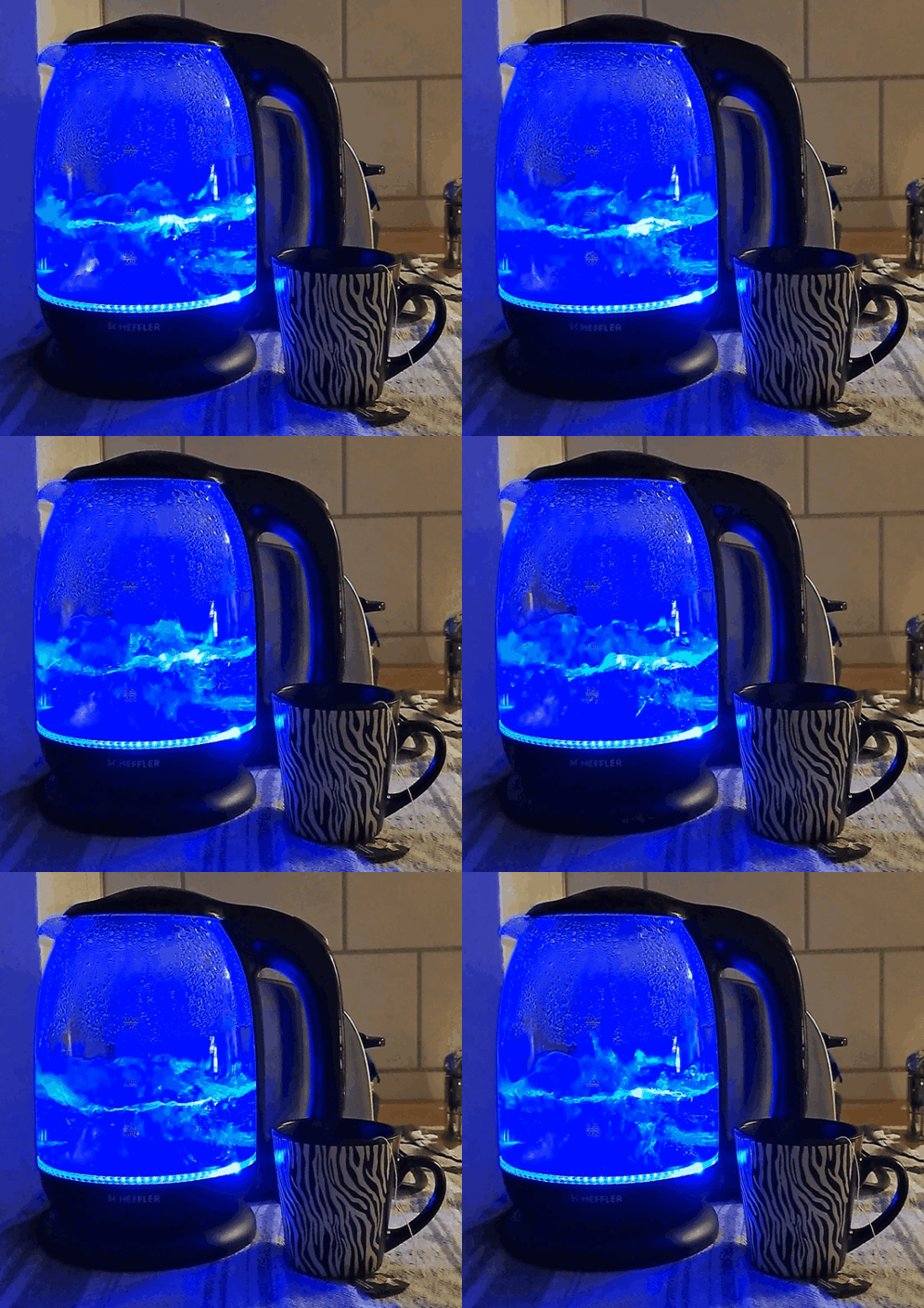
Get down and give me fifteen!
If your environment is full of distractions, maybe you put extra effort into reducing barriers and making the habit as automatic as possible.
This might mean choosing the gym that's literally on your route home rather than the fancy one across town, keeping your workout clothes in a bag by the door, or setting out your running shoes the night before.
The easier you make it to do the thing, the more likely you are to actually do it when decision fatigue hits.
The research was pretty clear that regardless of your personal timeline, past behaviour was still the strongest predictor of future behaviour. This is why even going to the gym just to sit in the sauna, buy a protein bar, or literally just drive into the car park counts as building your gym habit. It sounds silly, but you're creating that track record of "gym visits" that your brain will start to recognise as a pattern.
Whether you're an 85-day person or a 500-day person, the same principle applies - even small (but meaningful), consistent actions eventually add up to big changes.
Most of all, your timeline isn't a judgment on your worth as a person.
WRAPPING UP...
The next time you find yourself comparing your progress to someone else's, or beating yourself up because a habit isn't sticking as quickly as you'd hoped, remember all those invisible factors we've talked about today.
Maybe you're in a chaotic life stage, while they have a predictable routine.
Maybe you're working on a complex habit, while they're doing something simpler.
Maybe you're navigating a busy environment, while they have fewer distractions.
None of that is a reflection on your character or how much you "want it."
There's no medal for forming habits quickly, and there's definitely no shame in taking your time. Some of us are working with circumstances that make change easier, some are facing more challenges, and most of us move between both depending on what else is happening in our lives.
The goal was never to form habits as fast as humanly possible anyway. It's to build sustainable changes that actually stick around for the long haul, whatever pace that happens to be for you.
What's your experience been like with habit formation? Are you a quick-change artist or more of a slow-and-steady type? We'd genuinely love to hear your story - drop us an email!

Want to get nerdy?
If you want to dive deeper into the research on individual differences in habit formation, there are some fascinating studies out there exploring everything from personality factors to environmental influences.
References:
- Buyalskaya, A. (2021). Habit Formation in Exercise: A Large-Scale Analysis of Real-World Data
- Research review by Alex Pearson MSc. Body Matters - Behaviour Change Matters
For health and fitness professionals
Understanding why habit formation varies so dramatically between clients can be a game-changer for setting realistic expectations and avoiding the frustration that comes when progress doesn't match arbitrary timelines.
We also help conscientious, curious and compassionate fitness professionals develop the skills to work with each client's unique circumstances and timeline, rather than against them.
Find out more about our behaviour change and practice development services at behaviourchangematters.com