
Have you ever tried to stick to a new exercise routine for 21 days, only to find yourself struggling on Day 22? You're not alone - and you're definitely not broken.
The 21 Day Habit Myth:
Where It All Started
At some point, you've almost certainly heard that it takes 21 days to form a habit.
This pervasive piece of advice has become gospel in the self-help world. spawning countless challenges, apps, and programs promising to transform your life in just three weeks.
Maybe you've even tried it yourself. You set a goal to exercise every day, drink more water (although this habit is usually based on "dust the skirting boards in a messy room" advice at its finest), or eat more vegetables. You stuck with it diligently for three weeks, but somehow... it never quite felt automatic.
When day 22 rolled around and you had to drag yourself to the gym again, you might have thought, "What's wrong with me? Everyone else seems to manage this."
But here's the question no-one asks: Is this "21 days to form a habit" claim actually accurate?
What the science actually shows about habit formation
Recently, our head coach Alex wrote a detailed research review analysing a groundbreaking study that tracked real gym attendance data from over 30,000 people across 14 years.
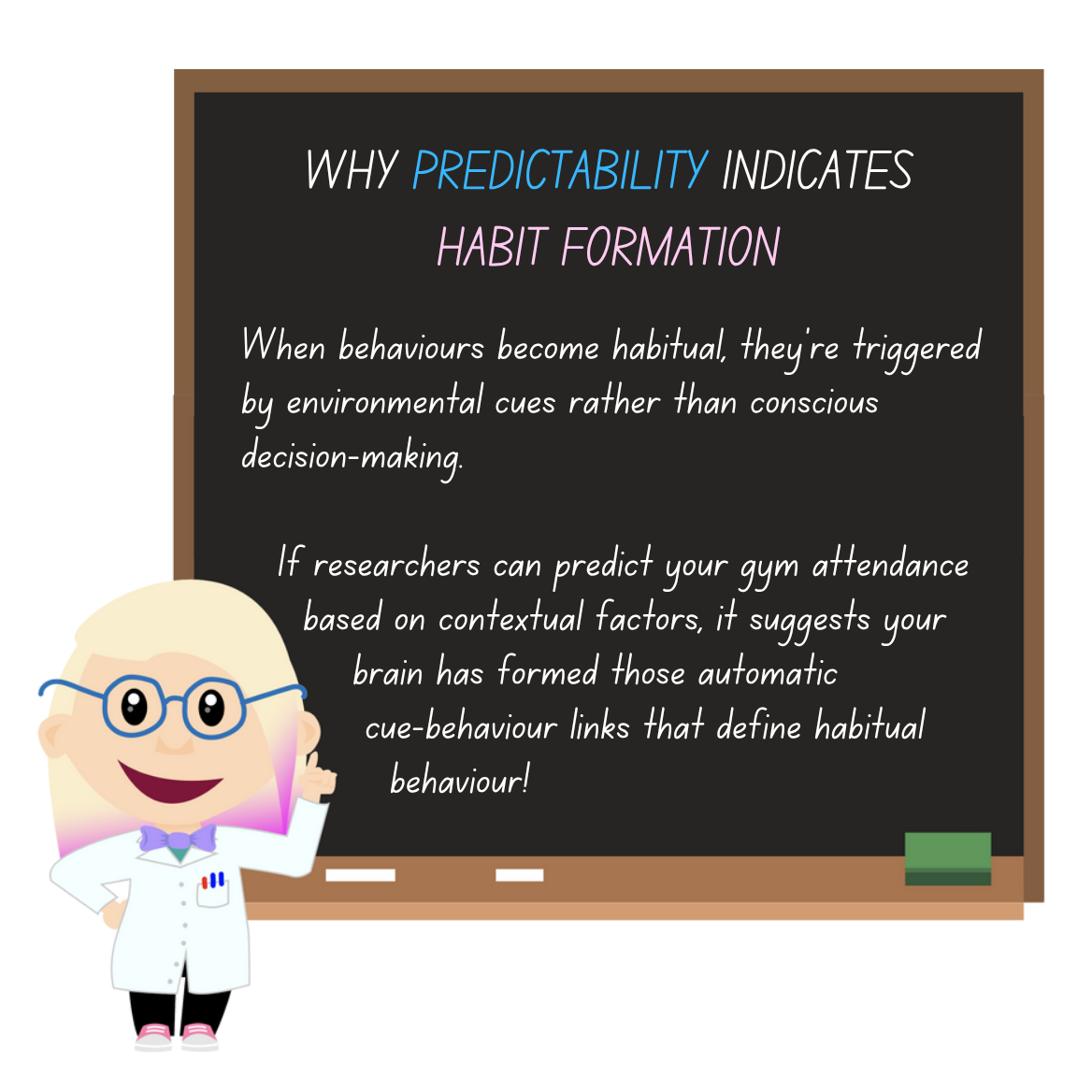
Rather than relying on surveys or self-reports (which can be unreliable when studying unconscious behaviors), researchers used machine learning to identify when each person's gym attendance became predictable based on contextual cues - indicating the behaviour had likely become habitual.
The Real Timeline for Exercise Habits
The result? The median time for gym attendance to become predictable enough to be considered habitual was 211 days.
In other words, it took about 30 weeks (seven months) before people's gym visits could be reliably predicted by environmental factors - like how long it had been since their last visit, or what day of the week it was. This reliable predictability was strong evidence that the behavior had become automatic.
This finding aligns with other research too. Dr. Phillippa Lally found that simple eating habits (like having a piece of fruit with lunch) took about 65 days on average to become automatic, while exercise habits typically took anywhere from 6-17 weeks to form.
As exercise requires more time, effort, and often travel, it’s unsurprising that it takes longer to become habitual than a simpler habit, like eating a piece of fruit.

Simpler behaviours - like eating fruit with a meal - become habitualised more easily than complex behaviours like exercising regularly.
You're Not Broken: Why This Changes Everything
You're not lacking willpower.
You didn't fail.
The timeline you were given to form your chosen habit was simply...well, wrong.
If you've tried to build a healthy habit before and felt frustrated that it wasn't "sticking" after a few weeks, that's completely normal. In fact, it's exactly what the research would predict.
Great news, right?! I mean, how many times have you abandoned a potentially beneficial habit because it didn't feel automatic after a few weeks? How much guilt and self-criticism could you have avoided with accurate expectations?
Well, yes, but...
"But SEVEN MONTHS sounds like FOREVER!"
Well...yes, it is quite a long time. It's certainly a lot more than 21 days!
That's exactly why it's crucial to ensure that...
1. Your habit actually moves the needle.
Choose habits that will actually get you closer to your desired outcomes.
There's so much health advice out there, it can be hard to wade through what's helpful...and not all of it is.
A prime example of unhelpful advice (and therefore wasted effort) is the "drink more water" habit I mentioned earlier.
For most health goals, this isn't going to move the needle much (or at all), even though it's often given as weight loss advice. It's like dusting skirting boards in a messy room instead of picking up the clothes and clearing the dishes - technically cleaning, still taking effort, but not addressing what makes the biggest difference.
Instead, focus on habits which are the equivalent of picking up the clothes in that messy room - the things that will make a difference and move you towards your goal.

Would you start by dusting the skirting boards?
Here's what this looks like in practice:
So, let's say you have a goal to reduce your risk of heart disease (maybe it runs in your family, or you discovered your blood pressure was towards the high end of normal).
You decide to work towards the UK activity guidelines of:
- 150 minutes of moderate intensity activity per week (where you can talk but can't sing - like brisk walking)
- OR 75 minutes of vigorous intensity activity per week (where you can only say a few words without pausing for breath - like running).
Great stuff! That's a behaviour that will have an impact on your goal.
But you also need to make sure that...
2. Your habit is as easy and realistic as possible
Essentially, aim for the highest return on investment - choose a habit that will have the biggest impact for the least effort.
Let's take a look at a few ways you can do that…
Evidence-Based Strategies for Building Lasting Exercise Habits
Here are proven ways to make habit formation easier and more sustainable...


Make It Enjoyable
If you hate running, don't try Couch to 5K just because Sharon in HR recommended it. Try something you think you might enjoy (or at least hate less):
- Love being social? Find workout buddies or group classes
- Prefer your own company? Solo gym sessions, yoga, or cycling might be perfect
- Want to learn while you improve your health? Consider starting a sport or martial art

Reduce The Friction
Remove as many barriers as possible between you and your desired behaviour:
- Location matters: Choose an exercise venue that's actually on your route home (not the "perfect" one across town)
- Timing is everything: Pick a realistic time (simultaneously trying to become someone who exercises AND gets up at dawn makes it much harder than doing just one thing)
- Prepare in advance: Keep one set of workout clothes packed and ready at all times
- Start smaller: Pick a frequency you're 80-90% confident you can stick to. You can always increase once it's ingrained.
And if that last idea sounds like it’s “not enough”, remember this…
Past behaviour predicts future behaviour.
The research showed that the strongest predictor of future gym visits was simply...past gym visits.
FThis means that whatever gets you there consistently - even if it's just sitting in the sauna or buying a protein bar - counts towards building that habit. as cliche as it sounds, the really is consistency, not perfection.

Remember The Bigger Picture
Seven months might seem like a long time, but here's a perspective shift:
If someone told you that in less than a year, you could develop a skill that would benefit your health for decades to come, that would feel like a pretty good investment, wouldn't it?

Imagine if someone told you that you could be set for life if you spent the next seven months putting away a manageable amount of money every week. Does seven months seem like such a long time now?
The Individual Difference No-One Talks About
Here's something else that might surprise you: while the average was 211 days, some people in the study formed habits in just 85 days, while others took nearly 600 days.
That's a massive difference - and it has nothing to do with character or willpower.
Factors that influenced habit formation speed included:
- Age (older individuals formed habits more predictably)
- Living situation (people in lower population density areas with stable family structures)
- Personal circumstances and competing priorities
Wondering if you're a fast or slow habit-former? In our next blog we'll help you figure out your personal timeline and work with it, not against it. Get it delivered to your inbox:

Our weekly email newsletter is packed with insights, tips, and reliable, scientifically accurate information on all things health, nutrition and behaviour change.
Sound like your cup of tea?
Click the button below to enter your details and we'll see you in your email inbox!
We have an “all substance, no spam” policy, so we only send emails which we think will genuinely help you. If for any reason you don’t want to hear from us anymore – that’s cool. We value and encourage choice, so you can unsubscribe any time.

WRAPPING UP...
So, what's the main thing to take away from all this?
First, give yourself a break. If you've struggled to stick with habits in the past, it's not because you lack willpower - it's because you were given unrealistic expectations. Habits genuinely take months to form, not weeks.
Second, make it easy on yourself. Pick something that will actually help you reach your goals (not just something that sounds healthy), remove as many barriers as possible, and start smaller than you think you need to.
And remember - the best predictor of whether you'll stick with any healthy habit is whether you did it yesterday. So focus on building that track record, one small step at a time.
If you're working on building a healthy habit right now, remember: you're not behind schedule, you're right on track. The research gives us permission to be patient with ourselves while providing a roadmap for success.
What health habit are you working on? Drop us an email and let us know - we'd love to hear about your journey.
Want to get nerdy?
If you have any questions or want to learn more about the topics we've covered in this post, our head coach Alex Pearson MSc loves nothing more than geeking out with curious minds like you. Drop him an email here.
References:
Buyalskaya, A. (2021). Habit Formation in Exercise: A Large-Scale Analysis of Real-World Data
Lally, P., et al. (2010). How are habits formed: Modelling habit formation in the real world. European Journal of Social Psychology
For health and fitness professionals
If you're a health or fitness professional, business owner, or team leader, we also help conscientious, curious and compassionate fitness professionals - like you - to harness the power of evidence-based decision making based on behavioural science.
We give you the tools to confidently facilitate behaviour change for your clients, helping them attain faster and longer-lasting results - and helping you to build the meaningful, sustainable, and rewarding career that attracted you to the fitness industry in the first place.
Find out more about our behaviour change and practice development services at behaviourchangematters.com