
Welcome to the final installment of this year's HEALTH HORRORS series!
This week we're investigating...
ARTIFICIAL SWEETENERS.
Many of these sugar-replacing food additives were hailed for their benefits, before being banned and left for dead...
Then - sometimes DECADES after being buried - they rose from the grave once more...
...But, are they really the monsters they're made out to be?
Picture this scene.
(The following may or may not align with your own goals or experiences, but lend us an ear!)
You’re trying to keep your calorie intake under control as you’re focusing on a fat loss goal.
You’ve looked at your current eating habits, and realised that your sweet tooth is causing you to consume more calories than you’d like…but you don’t want to have to give up the treats altogether.

You’ve switched from having sugar in your tea and coffee, to having sweetener instead. So far, so good - perhaps it’s not quite as nice as regular sugar, but it fills the need enough that you’re happy to keep it up.
Until you mention this perfectly innocent habit change to a friend…and next thing you know you’re being bombarded with all sorts of horror stories about how bad sweeteners are for you.
Did you know they’re carcinogenic?
Did you know they actually make you GAIN weight?
Did you know they can cause diabetes?!
Reeling from all this, you’re now confused and worried. Are you risking your health? A lot of people on the internet - and some scientific studies - seem to say yes.
What do you do now?

We think that this is the scariest of all of our Health Horrors. Not because of the sweeteners themselves, though.
It's scary because this is what happens when media sensationalism meets a lack of understanding of how research works.
It happens all the time, and can be anything from unhelpful to potentially dangerous.
Think of how many headlines you’ve seen like this…
“NEW STUDY SHOWS…”
“SCIENTISTS SAY…”
Often followed by comments criticising scientists for “changing their minds”.
The thing is, that’s what science DOES.
That IS the scientific process.
Science adjusts its views based on what’s observed.
Lots of researchers consistently and repeatedly observe the same thing? That’s scientific consensus. (Not, as some believe, a bunch of boffins sitting around a table sharing their opinions and agreeing to agree!)
So, if you want to put your detective hat on, and look for studies that indicate artificial sweeteners DO increase insulin levels in the blood…they are out there!
And because they are the ones most often referred to, and linked to (usually by people promoting a “natural” lifestyle, or sensationalist media trying to worry you), you’ll see the Google summary outright says “Yes, artificial sweeteners do cause insulin levels in the blood to rise.”
But there are far more studies that show the opposite.
We understand why people get confused and frustrated by mixed messages. It’s one of the biggest reasons we do what we do. We want to arm people with the knowledge they need to navigate the jungle of information out there, and be able to identify what is truth, what is accurate, what is helpful, and what is relevant to them.
So, let’s look at some of the claims being made about artificial sweeteners, and whether they really are the boogeymen they’ve been made out to be.

ARE ARTIFICIAL SWEETENERS CARCINOGENIC?
This is based on really, REALLY out-of-date information, largely based on just one artificial sweetener: saccharin.

First discovered in 1879, it was the world’s first artificial sweetener - and, as with most new things, it came with a lot of distrust and uncertainty.
Indeed, the word “saccharin” has entered common parlance as being a word for someone who is excessively nice, too sweet to be believable, and not to be trusted. Not a great association!
Saccharin was first banned in 1911, 32 years after its discovery. When sugar shortages became a problem during the World Wars, it was brought back into public usage for a while - only to be banned again across various countries between 1977 to 1981 in fear of possible carcinogenesis after it was found to cause bladder tumours in rats.
If you read last week’s Health Horrors blog about chemicals (if you didn’t, check it out here) - you’ll remember us explaining how it’s the amount of a given substance you’re exposed to that defines its toxicity. The dose makes the poison.
Saccharin did, indeed, cause cancer in some rats. But animal trials and human trials can have dramatically different results, and - even taking the differences in physiology into account - the rats were given an ENORMOUS dose of saccharin before tumours were induced.
For a human to be exposed to the equivalent dose, they would have to consume around 800 cans of saccharin-sweetened soda.
We love a fizzy drink, but this is beyond even the most dedicated pop enthusiast, no?
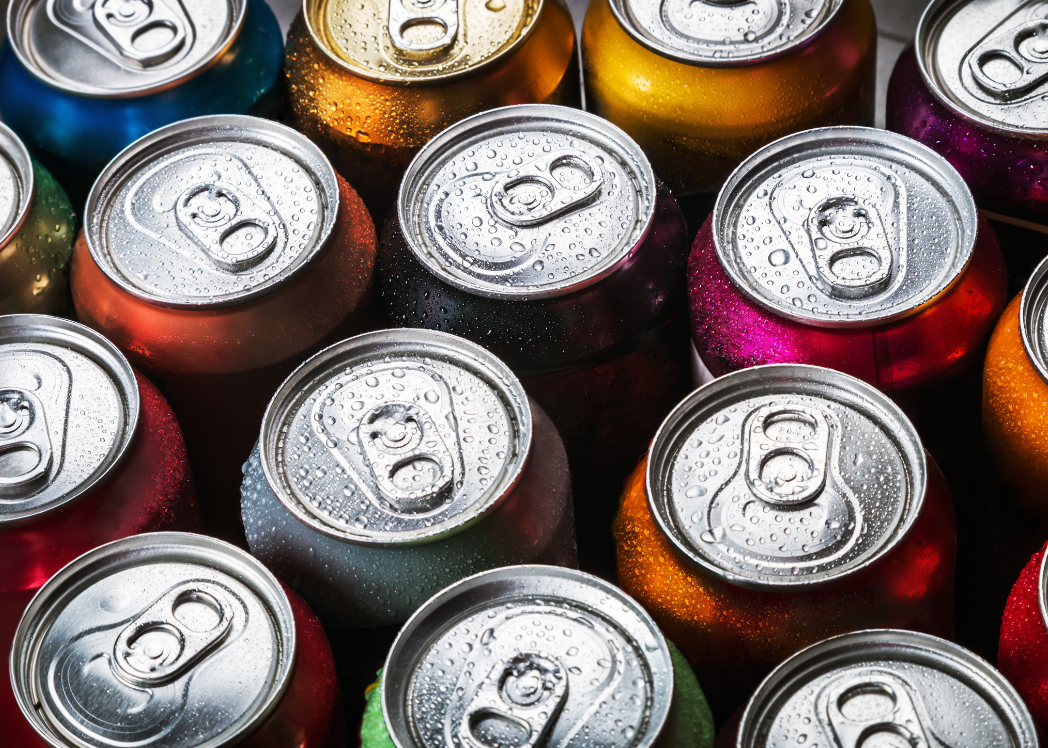
Down in one, down in one, down in one...
Since the saccharin debacle, almost every other sweetener has been banned - and then unbanned - for the same reasons. Cyclamate was banned in the UK in the 1960s due to fear of cancer-causing potential, and came back from the grave in the 90s after further study. It’s not used much nowadays as it’s one of the weakest-tasting sweeteners, but you would still need to consume 550 cans of cyclamate-sweetened beverage in order to receive an equivalent dose to the rats used in the studies who - like in the saccharin experiment - developed bladder tumours.
In the early 2000s, the sights were set on aspartame, one of the most-used - and most-studied - food additives used in human food production. ONE research paper made a link between aspartame and leukaemia.
That paper has since been summarily discredited due to flawed methodology.
Thousands more studies have been done since, and the findings of that flawed paper have not been successfully replicated. Over 100 regulatory bodies have deemed it safe for human consumption. And yet…the stain on aspartame’s reputation remains. Pepsi pulled it from their drinks in 2015, not because of any actual health hazards, but simply because public opinion of the ingredient was so poor that people stopped buying the drinks.
To this day, aspartame is one of the most demonised food additives.
Remember what we said about sensationalist media latching onto one study’s results? One study does not make a consensus. If nobody can reliably replicate the results from a study, but thousands of other studies prove that said study is in fact an odd-one-out, it doesn’t make sense to discard the larger body of evidence. But that is, unfortunately, what keeps happening - and it’s human nature to remember the negative, as that is how we have survived so far as a species!
CAN ARTIFICIAL SWEETENERS MAKE YOU GAIN WEIGHT?
The logic behind this argument goes thus:
Artificial sweeteners don’t give you the same mouthfeel, taste, or dopamine release in the brain. Without that delicious neurotransmitter reward, we are unsatisfied with our food - and so we don’t experience satiety and end up having to eat far more in order to feel full and satisfied. SO regular consumption of sweeteners causes regular overeating, and therefore, weight gain.
This has been disproven again…and again…and again. Sugar may trigger a reward response, but it is not responsible for feelings of satiety (feeling full).
Imagine how much Haribo you could eat in one sitting before you felt full, and how much sugar you would consume in the process.
Now imagine how much broccoli you could eat instead.

Just broccoli, that is - however delicious it is with butter, pepper, and grated parmesan...
You’d feel full on the broccoli way sooner, and for considerably less sugar intake. High calorie density foods don’t make you feel fuller faster - quite the opposite.
The correlation between artificial sweeteners and weight gain was based on studies looking at subjects who were diabetic, and/or already clinically overweight.
Can you guess why those people might have higher intakes of artificial sweeteners?
They were already struggling with dietary habits, and were already using sweeteners as sugar replacements in an attempt to control their body weight.
In other words - people who use sweeteners regularly are likely to be people who are already struggling with weight gain.
Correlation versus causation. (For some excellent examples of this, here's a silly Instagram post)
No studies have been able to replicably demonstrate that sweeteners cause weight gain in humans.
CAN ARTIFICIAL SWEETENERS CAUSE DIABETES?
It was once suggested that artificial sweeteners such as aspartame, sucralose, acesulphame-K, saccharin etc - would still trigger an insulin response from your body, because they taste sweet. When we eat sugary food, the taste receptors in our mouths send a signal to trigger the pancreas into producing insulin, in preparation for our bodies to start absorbing the glucose in our food. Clever, right?
This process is dubbed the “cephalic phase insulin release”, from the Greek “cephalos” meaning “head” - in other words, the process of releasing insulin while the food is still in or around your head. The cephalic phase encompasses not just the taste of food, but also the sight, smell, or even the THOUGHT of food.)
It was proposed that having increased insulin with no sugar to work on eventually causes insulin resistance over time, meaning that artificial sweeteners are useless as a diet food.
Here’s the thing.
There was extensive research carried out throughout the 1990s (yes, that’s thirty years ago!) - and nobody was able to provide consistent evidence to support the hypothesis of cephalic phase insulin release.
There have been many more recent studies on insulin response to sweeteners - but, as before, the subjects are typically already diabetic. Insulin response in diabetic subjects is already more likely to be outside of typical parameters, and many of these studies were focused on the value of sugar replacement for people who cannot safely consume normal sugar. They were not to determine whether sweetener consumption would cause diabetes in previously non-diabetic people...because that has already been disproven.
In summary, all the available human data we have shows that artificial sweeteners do not significantly affect insulin levels.
So rest assured, tasting, smelling, or thinking about something sweet without actually consuming the glucose to go with it….isn’t going to give you diabetes.

That's A (Spooky Salad) Wrap!
We all want to do what’s best for our health. We all want to do what we can to live our longest, happiest and healthiest lives. And however much we hope for plain sailing on our health journeys, the water is so easily muddied with bad advice and misinformation.
We are here to help you figure out what’s useful, evidence-based advice, and what is marketing hype and media scaremongering.
Whether you’re a subscriber or not, whether you’re a client or not, our inbox is always open if you have questions or worries that you need help or reassurance with.
If you have any questions, pop us a message here.
That wraps it up for this year’s Halloween Health Horrors! We hope you’ve enjoyed this blog series, and let us know if there’s a particular subject you’d like us to tackle in the future.
There's More Where This Came From...
Sick of misinformation?
Our weekly email newsletter is packed with insights, tips, and reliable, scientifically accurate information on all things health, nutrition and behaviour change.
Sound like your cup of tea?
Click the button below to enter your details and we'll see you in your email inbox!
We have an “all substance, no spam” policy, so we only send emails which we think will genuinely help you. If for any reason you don’t want to hear from us anymore – that’s cool. We value and encourage choice, so you can unsubscribe any time.